Top 10 Push Button On Off Switches for Global Buyers?
In today’s fast-paced world, the demand for reliable and user-friendly control devices is on the rise. The "Push Button On Off" switch is a common component, ensuring efficient operation across various applications. From household appliances to industrial machinery, these switches provide crucial functionality.
Selecting the right push button on off switch can be a challenge. Buyers must consider factors like durability, ease of installation, and design. These switches vary widely in materials and specifications. Understanding these differences is essential for making a sound investment.
In this guide, we will explore the top 10 push button on off switches available in the market. Each option has its strengths and weaknesses. We will highlight their features, usage scenarios, and potential drawbacks. This information aims to empower global buyers to make informed decisions. Finding the perfect switch can enhance performance and safety in any project.
Understanding Push Button On-Off Switches: A Comprehensive Overview
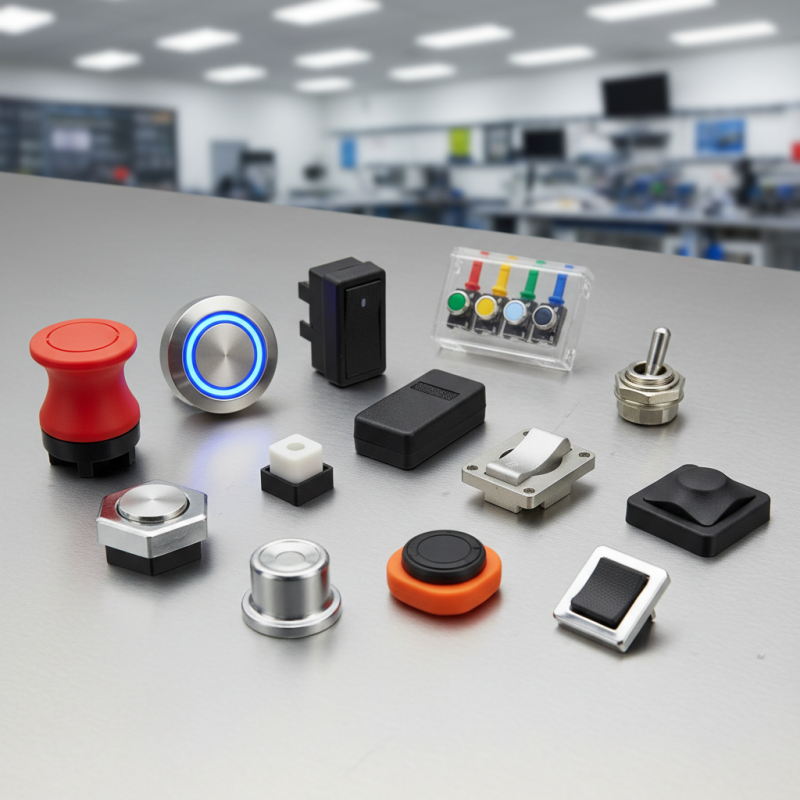
Push button on-off switches are commonly used in various applications. They serve as simple, effective means to control electrical devices. Understanding their functionality is crucial for anyone working with electrical components. These switches allow users to easily toggle devices, providing convenience in everyday settings.
When examining a push button switch, one must consider aspects like durability and usability. Some switches may fail under heavy use or adverse conditions. Testing the switch under various scenarios can help identify potential flaws. While many switches look similar, their internal mechanics often differ, which can affect performance.
Designing for user experience is essential. A poorly designed button can frustrate users. The decision to incorporate tactile feedback or visual indicators can greatly enhance usability. Yet, it remains a challenge to balance functionality with aesthetics. Reflecting on these factors can lead to better choices for both designers and buyers.
Key Features to Consider When Choosing Push Button Switches
When selecting push button on/off switches, key features play a critical role. Durability is paramount. According to industry reports, switches often face harsh environments. Mechanical components must withstand wear and tear over time. Choose models with IP ratings for waterproof and dustproof capabilities. This is essential for outdoor applications or industrial settings.
Another important factor is actuation force. A report from the Electronics Research Institute states that the ideal force for user comfort typically ranges between 2 N and 5 N. This range ensures that the switch is easy to press yet offers adequate resistance. Additionally, consider the size and ergonomics of the button itself. An intuitive design enhances usability, reducing mistakes in operation.
Voltage and current ratings are also crucial. Rated voltage may vary between 12V to 240V, depending on the application. Selecting the wrong rating could lead to failures or safety hazards. Furthermore, think about aesthetic options. Color and shape can affect user interaction. Minimalist designs generally receive positive feedback. However, one must balance aesthetics with functionality.
Top 10 Push Button On Off Switches for Global Buyers
| Model |
Voltage Rating |
Current Rating |
Material |
IP Rating |
Dimensions (mm) |
Features |
| Model A |
220V |
10A |
Plastic |
IP65 |
30x30 |
LED indicator, waterproof |
| Model B |
120V |
5A |
Metal |
IP54 |
25x25 |
Sleek design, compact size |
| Model C |
250V |
16A |
Plastic |
IP68 |
40x40 |
Heavy-duty, industrial use |
| Model D |
12V |
3A |
Plastic |
IP67 |
20x20 |
Compact design, easy installation |
| Model E |
48V |
10A |
Metal |
IP55 |
35x35 |
Durable, high sensitivity |
| Model F |
230V |
5A |
Plastic |
IP52 |
30x30 |
Standard size, reliable |
| Model G |
120V |
15A |
Aluminum |
IP65 |
45x45 |
Rust-proof, for outdoor use |
| Model H |
12V |
2A |
Plastic |
IP67 |
15x15 |
Miniature, efficient |
| Model I |
230V |
10A |
Plastic |
IP54 |
35x25 |
User-friendly, backlit option |
| Model J |
220V |
16A |
Metal |
IP68 |
50x50 |
High capacity, durable design |
Top 10 Push Button On-Off Switches: An In-Depth Review
When selecting push button on-off switches, buyers often prioritize reliability and ease of use. Recent industry reports indicate that the demand for high-quality switches continues to grow, driven by advancements in various applications. In sectors like automotive and consumer electronics, these switches play crucial roles. Their compact design and intuitive operation make them indispensable for numerous devices.
Consider the durability of the switch. A report from the Institute of Electrical and Electronics Engineers (IEEE) shows that switches rated for high-cycle operations enhance longevity. These switches typically can withstand thousands of on-off cycles without failure. For buyers, this translates into reduced maintenance costs and increased efficiency.
Tip: Always check the specifications for cycle life. Look for switches that offer superior performance metrics. In terms of environmental factors, switch housings must resist external elements. This ensures they function optimally over time.
Another key consideration is the tactile feedback. Quality push buttons provide distinct feedback, indicating successful activation. Research suggests that switches with satisfying clicks enhance user experience. Unpleasant, unresponsive switches can frustrate users and ultimately affect device usability.
Tip: Test different models to find the tactile response that feels best. Balancing form and function remains vital in creating effective user interfaces. The right switch can significantly elevate product design and user satisfaction.
Comparison of Pricing and Availability for Global Buyers
When considering the best push button on-off switches,
pricing and availability are crucial factors. Different regions offer varied options, which can
affect global buyers. Some markets have a wide range of prices,
providing choices for budget-friendly buyers.
For instance, switches priced under $10 often lack advanced features.
However, they remain popular for basic applications. On the other
hand, more expensive options can offer better durability and functionality.
It's important to evaluate whether the additional features justify the higher price.
Availability also varies widely. In some areas, specialized switches may take weeks to arrive.
Global buyers should consider local suppliers for quicker delivery. International shipping
can also increase costs. Overall, buyers must balance their budget
with practicality and accessibility. Reflecting on local resources can help identify the
best choice for their needs.