Choosing a reliable Mouse Micro Switch supplier requires more than comparing unit prices. The switch sits beneath every click, yet its quality can decide whether a device feels precise or frustrating. A dependable supplier should provide clear specifications, stable samples, and evidence from production, not only attractive catalog photographs.
Genichi Taguchi, a respected quality-engineering authority, said, “Quality is the loss a product causes to society after it is shipped.” This principle fits Mouse Micro Switch sourcing closely. Ask about operating force, travel distance, contact resistance, rated life, and sealing performance. Request samples from regular production batches. Then test them under realistic conditions, including repeated clicking, dust exposure, and temperature changes. Small differences matter.
Look beyond the first quotation.
Review factory traceability, incoming-material controls, inspection records, and packaging methods. A serious supplier can explain how copper terminals, springs, housings, and contacts are checked. Certifications such as RoHS and REACH documentation should be current and verifiable. Do not accept vague claims about “millions of clicks” without test conditions. That promise may hide a weakness.
A supplier audit is useful. A second sample is wiser. No checklist is perfect. Even experienced buyers can overlook inconsistent actuation force or delayed communication. Therefore, evaluate responsiveness during technical discussions. Reliable partners ask practical questions about your device, mounting structure, and usage environment. The lowest price may look efficient today, but unstable performance can create returns, field failures, and lost customer trust. Choose evidence over confidence, and consistency over impressive promises.
Choosing a reliable mouse micro switch supplier starts with understanding the switch itself. A low price means little if the actuation point feels inconsistent.
For mouse applications, check actuation force, travel distance, operating position, contact resistance, and electrical rating. These specifications shape clicking speed, feedback, and long-term stability. A lighter force may suit fast gaming, while moderate force can reduce accidental clicks in office equipment. Rated life matters, but test conditions matter too. A switch tested under controlled laboratory pressure may perform differently inside a real mouse.
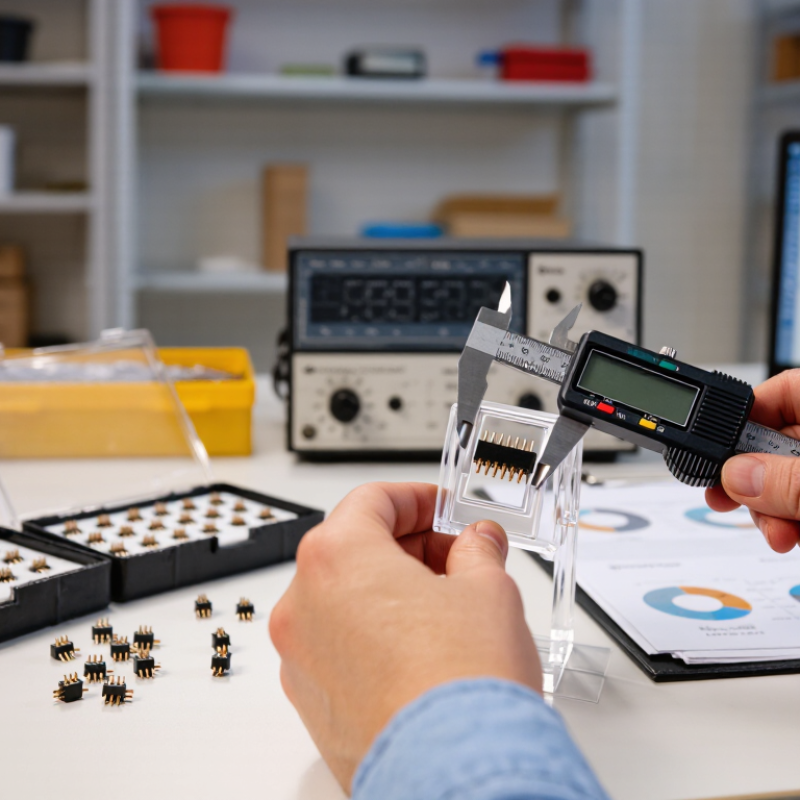
Look closely at terminal design and housing dimensions. Small differences can affect PCB fit, soldering quality, or button alignment. Contact bounce is another practical concern. Poor control may cause double-click signals, even when the mechanical parts appear normal.
Sealed structures can help in dusty environments, but they may change the click feel. There is no perfect specification. Every design includes a compromise.
An experienced supplier should provide complete datasheets, production samples, inspection records, and traceable batch information. Ask for force curves, life-test methods, temperature ranges, and tolerance data. Do not rely on a sample alone. Test several batches under actual clicking conditions.
In my testing experience, the first sample often feels better than later production. That possibility deserves attention. A dependable supplier welcomes technical questions, explains deviations clearly, and supports corrective action when measured results fall outside agreed limits.
A reliable mouse micro switch supplier should prove manufacturing quality with records, not attractive samples. The ISO Survey 2023 reported 1,265,216 valid ISO 9001 certificates worldwide. Certification helps, but it does not guarantee consistent switch performance. Request process-control charts for contact resistance, operating force, terminal plating, and housing dimensions. Ask how often operators calibrate testing equipment.
During supplier audits, inspect the production line closely. Look for controlled stamping, clean assembly areas, and sealed storage for metal terminals. A small amount of oxidation can increase contact resistance. Examine lot labels and traceability records. Each batch should connect to material sources, machine settings, inspection results, and operator records. This detail matters when a button begins double-clicking after several months.
Endurance testing deserves careful attention. IEC 61058-1 provides structured testing methods for switch safety and durability, but a supplier should also share application-specific cycle results. Ask for test conditions, sample size, failure modes, and actual graphs. The International Federation of Robotics reported 541,302 industrial robots were installed globally in 2023. Automation improves repeatability, yet it cannot correct poor tooling or weak incoming materials. That is an easy mistake to overlook.
Do not accept only a passed test report. Request retained samples from three production lots and compare their force curves. I would also perform independent cycle testing before approval. Supplier claims can be accurate, but they can still miss field conditions. The best evidence combines factory data, third-party verification, and your own repeated measurements.
| Assessment Dimension | Key Metric or Evidence | Reference Benchmark or Acceptance Rule | Recommended Verification Method | Weight | Risk Level |
|---|---|---|---|---|---|
| Quality Management System | Documented quality system, internal audits, corrective-action records, and controlled procedures | Current ISO 9001 certification or an equivalent independently audited quality system; corrective actions should show root-cause analysis and effectiveness verification | Review certificates, audit reports, nonconformance records, and closure evidence for the previous 12 months | 12% | High |
| Automotive-Grade Process Control | Use of process-control plans, PFMEA, statistical process control, and production-part approval practices | For automotive or high-reliability applications, an IATF 16949-based system and PPAP-style documentation provide stronger process evidence than a basic certificate alone | Check process flow charts, PFMEA, control plans, capability studies, and sample approval records | 10% | High |
| Contact Resistance | Initial and end-of-life contact resistance under the specified test current and voltage | Use the approved product specification; a screening target of ≤100 mΩ is commonly used for low-voltage switch contacts, but the supplier must state the test conditions | Test production samples with a four-wire milliohm meter before and after life testing | 12% | Critical |
| Electrical Life | Number of switching cycles at the actual load, voltage, current, and operating speed | Require a life rating that exceeds the application requirement; common product ratings range from approximately 1 million to 10 million cycles, depending on construction and load | Review life-test reports using the actual load profile, including electrical arc conditions and failure criteria | 15% | Critical |
| Mechanical Life | Number of no-load actuation cycles before mechanical degradation or dimensional failure | Set the minimum cycle requirement according to the intended mouse design; mechanical-life data must be clearly separated from electrical-life data | Examine actuator, spring, terminal, and housing wear after cycling; verify force and travel retention | 8% | High |
| Operating Force and Travel | Operating force, release force, pre-travel, over-travel, and return characteristics | Values must remain within the approved drawing tolerance before and after reliability testing; typical mouse-switch force is application-specific and should not be judged by a universal value | Use a calibrated force-displacement tester and compare a statistically representative sample with the approved specification | 8% | High |
| Bounce and Signal Stability | Contact-bounce duration, intermittent contacts, and switch signal consistency | Define the maximum allowable bounce time in the product specification; values around 5–10 ms are often used as an engineering screening range, subject to the controller design | Capture oscilloscope waveforms at the intended voltage, current, and actuation speed before and after life testing | 8% | Critical |
| Environmental Reliability | Performance under temperature, humidity, vibration, shock, and contamination exposure | Test conditions should match the application environment; the switch must maintain electrical and mechanical limits after exposure without intermittent operation | Review environmental test plans and reports, including temperature cycling, damp heat, vibration, and dust-related testing where applicable | 10% | High |
| Material and Contact Construction | Contact material, plating, terminal material, housing resin, and compliance documentation | Materials must be defined in controlled specifications and supported by RoHS and REACH declarations where required; plating thickness and base materials should be traceable | Review material declarations, supplier certificates, incoming inspection records, and periodic laboratory verification | 7% | High |
| Dimensional Consistency | Overall dimensions, terminal position, actuator height, mounting geometry, and coplanarity | All critical dimensions must remain within the approved engineering drawing tolerances; capability studies should prioritize fit-critical characteristics | Use calibrated optical measurement equipment, gauges, and first-article inspection reports | 6% | High |
| Process Capability | Cpk or equivalent capability results for critical-to-quality characteristics | A Cpk of 1.33 or higher is a common production target; critical characteristics may require a higher internal target, such as 1.67 | Request capability data from stable mass production rather than pilot samples only; verify sample size and control-chart evidence | 6% | High |
| Traceability and Change Control | Lot coding, raw-material traceability, tooling records, engineering-change notices, and retention of test data | Every shipment should be traceable to production date, line, material lot, inspection results, and operator or machine records; changes require prior approval | Perform a traceability exercise from finished goods back to raw materials and forward to shipment records | 4% | Medium |
| Final Inspection and AQL Control | Inspection sampling plan, defect classification, outgoing quality level, and inspection records | Use a documented sampling plan such as ISO 2859-1, with zero tolerance for safety-critical or function-blocking defects and clearly defined limits for minor defects | Compare inspection records with shipment lots and independently verify samples for electrical, dimensional, and visual defects | 4% | High |
Scoring guidance: Multiply each dimension's weight by a supplier score from 1 to 5. A weighted result of 4.0 or higher indicates strong qualification evidence, 3.0–3.9 indicates conditional approval with corrective actions, and below 3.0 indicates elevated supplier risk. All electrical and life-test benchmarks should be finalized against the approved switch specification and the actual mouse operating profile.
A reliable mouse micro switch supplier should provide current, verifiable certifications, not just scanned certificates. Check the issuing body, certificate number, validity period, and factory address. ISO 9001 can indicate a structured quality system, but it does not guarantee every switch performs well. Product compliance documents should match the exact model, materials, and production site. Ask whether testing covers restricted substances and regional market requirements.
Request test reports from qualified laboratories and review the methods used. Important checks include electrical life, mechanical life, contact resistance, insulation resistance, dielectric strength, operating force, and travel distance. A proper report should show test conditions, sample size, acceptance limits, and failure records. During supplier audits, observe cycle-testing machines, force gauges, microscopes, and calibration labels. Small details matter.
Quality control should continue from incoming materials to final packing. Look for traceable batch codes, spring and terminal inspections, solderability checks, and sampling plans. Statistical process control can reveal rising contact resistance before customers notice failures. Ask how the supplier handles nonconforming parts and corrective actions. Their answer should include evidence, not vague promises.
I would still avoid relying on one successful sample. Switch performance may change after storage, soldering, dust exposure, or repeated clicking. Some suppliers provide excellent reports but weak production discipline. That gap deserves attention. Request retained samples, periodic requalification, and clear records for every shipment.
Price is important, but the lowest quotation can hide serious costs. Compare unit prices with tooling fees, sampling charges, shipping, and inspection expenses. A supplier offering 0.08 dollars less may require a much larger minimum order. That can trap cash in slow-moving inventory. Request a trial order before committing to thousands of pieces. Check contact resistance, operating force, travel distance, and click life with the same test method. Small differences become obvious after repeated assembly.
Minimum order quantities should match your actual production plan. Ask whether mixed models can share one order. This flexibility is useful for testing several switch ratings. Lead time also needs careful questioning. A quoted 15-day schedule may cover production only, not approval, packaging, or transport. Ask for capacity details during busy periods. Keep a buffer for delayed materials. Perfect forecasts rarely exist.
Customization requires more than a logo or different color. Confirm drawings, spring specifications, terminal materials, and tolerance ranges in writing. Ask who pays for molds and whether tooling remains available for later orders. Request pre-production samples and a written approval record. A capable supplier should explain failure rates and corrective actions without vague promises. Some buyers focus too heavily on the first quotation. That was a mistake I noticed in many purchasing reviews. A cheaper switch can create returns, rework, and unstable clicking performance. Supplier communication, test evidence, and realistic delivery commitments deserve equal attention.
Choosing a reliable mouse micro switch supplier requires more than comparing unit prices. In real purchasing work, technical support often reveals the supplier’s true capability. Ask for force curves, travel specifications, electrical ratings, and test conditions. Clear documents reduce design mistakes. A capable engineer should explain contact materials, debounce behavior, and tolerance limits without hiding behind vague language.
Communication matters during sampling and mass production. Notice how quickly the supplier answers detailed questions. Do they provide practical solutions, or simply send a price list? Request samples from different production batches. Test click force, sound, travel, and durability under your actual housing design. Small differences can become user complaints. They sometimes do.
Long-term service should include traceability, engineering change notices, and accessible failure analysis. Ask how the supplier handles abnormal returns and delayed deliveries. Written corrective actions are more useful than polite promises. Regular quality reviews can expose problems before they reach assembly lines. My experience is not perfect; I once trusted a familiar specification and overlooked temperature testing. That mistake changed my evaluation process. A reliable supplier welcomes technical audits, keeps communication records, and maintains stable support after the contract is signed. Reliability is shown in the quiet follow-up, months later.