

China Top 10 Mouse Micro Switch Suppliers?
Choosing the right Mouse Micro Switch supplier in China requires more than comparing prices or browsing polished websites. This guide introduces ten notable manufacturers and examines their practical strengths, product ranges, and quality controls. The focus is on switches used in gaming mice, office peripherals, wireless devices, and custom assemblies. Small differences matter. Actuation force, travel distance, click feedback, contact resistance, and rated life can change the user experience.
The supplier profiles are considered through an evidence-based lens. Relevant signals include factory experience, engineering capability, production capacity, export history, certifications, and sample performance. Where possible, buyers should request datasheets, inspection records, material details, and test samples before placing larger orders. A switch rated for millions of clicks still needs testing inside the intended mouse shell. Real assemblies reveal issues that catalogs often hide.
No ranking is flawless. Some companies publish limited technical information, while others serve different market segments. A lower-priced component may create higher costs through returns, inconsistent clicking, or difficult soldering. This overview therefore supports careful comparison rather than automatic selection. Buyers should confirm current specifications, minimum order quantities, lead times, warranty terms, and communication quality directly with each supplier. Listen to the click. It can be informative. The final choice should balance reliability, compatibility, customization, and long-term support, not marketing language alone.
What Are Mouse Micro Switches and Why Do They Matter?
What Are Mouse Micro Switches and Why Do They Matter?
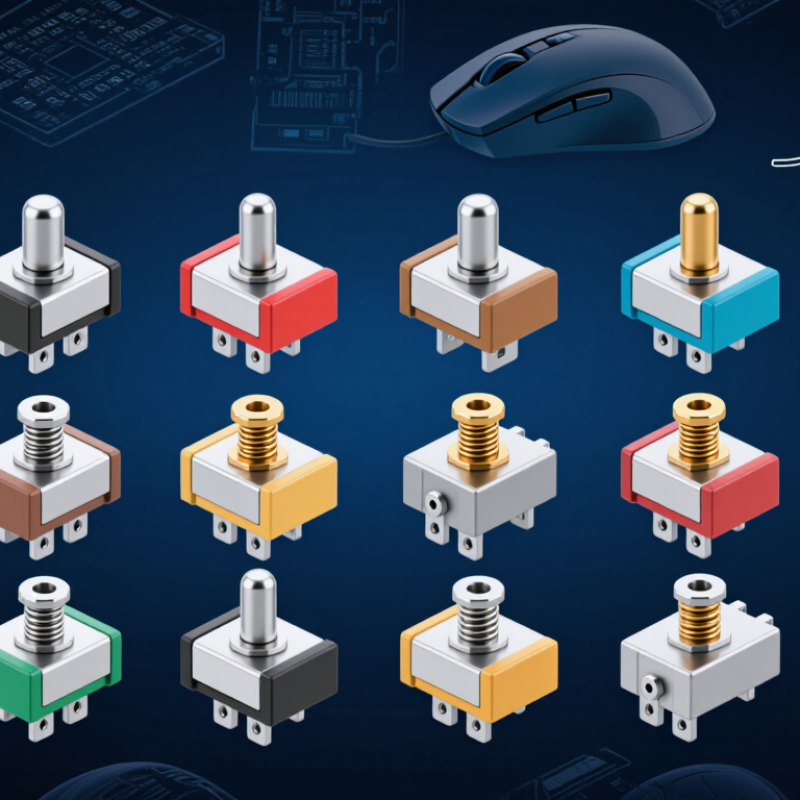
A mouse micro switch is a compact mechanical sensor beneath each button. It converts finger pressure into an electrical signal. Inside, spring contacts create the click, while the actuator controls travel and force. Good switches deliver a clear reset and stable debounce. Poor ones may produce double-clicks, missed inputs, or an uneven tactile feel.
The demand is substantial. IDC’s Worldwide Quarterly Personal Computing Device Tracker reported about 262.7 million PC shipments in 2024. Newzoo’s 2024 Global Games Market Report estimated 3.42 billion players worldwide. These figures help explain why switch consistency matters across office and gaming mice. Yet, a high cycle rating alone proves little. It can mislead. Actual service life also depends on dust, humidity, button geometry, soldering quality, and user force.
When comparing Chinese suppliers, buyers should request force-travel curves, contact-resistance limits, debounce data, and test conditions. A claimed 10-million-click rating needs context. Was testing performed continuously, or under realistic intervals? I would also inspect samples from multiple production batches. That step catches variation that a polished datasheet may hide. In a practical evaluation, engineers can record actuation force, release force, travel distance, and double-click failures. The International Electrotechnical Commission’s switch safety standards offer useful testing principles, but mouse-specific performance still requires application testing. A reliable supplier should provide traceable reports, controlled tolerances, and clear corrective-action records. Small details matter.
China Top 10 Mouse Micro Switch Suppliers? - What Are Mouse Micro Switches and Why Do They Matter?
Anonymous supplier comparison based on commonly published mouse micro-switch specifications and procurement criteria. Rankings are not intended to represent an official market share list.
| Profile | Typical Manufacturing Focus | Typical Electrical Rating | Mechanical Life Range | Operating Force Range | Contact Configuration | Common Quality Evidence | Best-Fit Applications |
|---|---|---|---|---|---|---|---|
| 01 | High-volume standard switch production | DC 12–16 V; 10–50 mA signal switching | Approximately 3–10 million actuations | 60–80 gf | Normally open, SPST | Incoming inspection, cycle testing, electrical continuity testing | Office mice, entry-level consumer mice |
| 02 | Low-force tactile switch production | DC 12–16 V; low-current digital signal use | Approximately 5–10 million actuations | 45–65 gf | Normally open, SPST | Force-displacement testing, sound and click-feel inspection | Light-click office and productivity mice |
| 03 | High-durability mechanical switch production | DC 12–16 V; signal-level switching | Approximately 10–20 million actuations | 55–75 gf | Normally open, SPST | Extended cycle tests, contact-resistance monitoring | Gaming mice and frequently used input devices |
| 04 | Dust-resistant and sealed switch production | DC 12–16 V; low-power control circuits | Approximately 5–20 million actuations | 60–80 gf | Normally open, SPST | Ingress-control checks, environmental and humidity testing | Portable mice and dusty operating environments |
| 05 | Miniature switch production for compact PCB layouts | DC 5–16 V; low-current signal switching | Approximately 3–10 million actuations | 50–75 gf | Normally open, SPST | Dimensional inspection, terminal alignment checks | Slim, compact and lightweight mouse designs |
| 06 | Custom tooling and OEM switch production | Defined by the approved product specification | Typically 3–20 million actuations | 40–100 gf, customized | SPST or SPDT, depending on design | PPAP-style documentation, first-article approval, traceability | Private-label and specialized mouse projects |
| 07 | Low-noise and damped tactile switch production | DC 5–16 V; signal-level operation | Approximately 3–10 million actuations | 50–80 gf | Normally open, SPST | Acoustic sampling, click consistency and return-force tests | Shared workspaces and quiet-use products |
| 08 | High-speed automated assembly production | DC 12–16 V; low-current switching | Approximately 5–20 million actuations | 55–85 gf | Normally open, SPST | Automated optical inspection, lot coding and process control | Large-volume mouse programs with strict consistency needs |
| 09 | Material-focused switch production with optimized contacts | DC 5–16 V; digital input applications | Approximately 5–20 million actuations | 55–80 gf | Normally open, SPST | Contact-resistance, oxidation and solderability testing | Reliability-focused consumer electronics |
| 10 | Export-oriented switch production with compliance support | DC 12–16 V; low-current signal switching | Approximately 3–20 million actuations | 50–90 gf | SPST or SPDT, according to application | RoHS and REACH declarations, lot traceability, inspection reports | International OEM and contract-manufacturing programs |
Note: Electrical ratings, life figures, operating forces, and certifications vary by model and test method. Buyers should request current datasheets, samples, inspection standards, and test reports before approving a supplier.
Related Posts
-
What Is a Mouse Micro Switch and How Does It Work?
-
Top Quality Push Button Starter Switch for Global Buyers?
-
What is a Micro Switch Push Button and How it Enhances Device Performance in Automation
-

Unmatched Excellence in Manufacturing Best Push On Off Switch from a World Class Chinese Factory
-
Top LED Rocker Switch Suppliers for Global Buyers
-
Top 10 Benefits of Using Dpdt Rocker Switch in Your Projects?