China Top 10 Latching Push Button Switch Suppliers?
Choosing among the China Top 10 Latching Push Button Switch suppliers requires more than comparing catalog prices. Reliability depends on contact materials, actuator life, ingress protection, terminal design, and documented testing.
Grand View Research and MarketsandMarkets both identify growing demand for industrial controls, automation equipment, and durable switching components. Their industry reports also emphasize miniaturization, longer service life, and dependable performance in harsh environments. These trends directly influence the Latching Push Button Switch market.
A practical supplier review should examine factory experience, ISO 9001 systems, IEC 60947-5-1 compliance, and batch-level quality records. Product samples matter. A metal button should return smoothly, lock firmly, and release without hesitation. Small details often reveal weak process control.
W. Edwards Deming, a respected manufacturing-quality expert, stated, “Quality comes not from inspection, but from the improvement of the production process.” This principle fits switch sourcing closely. A polished sample cannot replace stable production evidence.
The suppliers discussed in this guide are evaluated through product range, customization capability, electrical ratings, certification transparency, export experience, and after-sales responsiveness. Some rankings remain subjective. Public data can be incomplete, and supplier capabilities may change.
That uncertainty deserves attention.
Buyers should verify current certificates, test reports, lead times, and warranty terms before placing an order. The strongest Latching Push Button Switch supplier is not always the largest one. It is the supplier that consistently delivers safe, traceable, and application-ready products.
Understanding Latching Push Button Switches and Their Applications
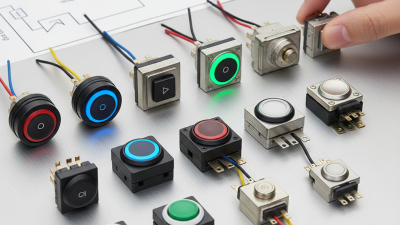
A latching push button switch keeps its selected state after the user releases it. Press once, and the contacts change position; press again, and they return. This differs from a momentary switch, which stays active only while pressed. The distinction is small but important. In a control panel, a latching switch can maintain a machine’s operating command without requiring constant pressure.
You might see these switches on test equipment, lighting panels, and compact industrial controls. Picture an operator wearing gloves, pressing a clearly marked button, then checking a status lamp across the room. Button size, travel, and tactile feedback affect how confidently that action feels. Contact ratings matter too. A switch suitable for a low-current signal may not safely handle a motor directly. Inductive loads can also produce electrical stress, so designers often use a properly rated relay or driver.
Selection takes more than matching a panel hole. Check the operating voltage, current, contact arrangement, mounting depth, terminal style, and expected switching cycles. Consider dust, moisture, vibration, and temperature near the installation point. An IP rating helps describe enclosure protection, but it does not answer every durability question. Read the product datasheet and test the switch in the intended assembly. I have seen a suitable-looking part become awkward when its terminals blocked nearby wiring. Small detail, real consequence.
How to Evaluate Chinese Latching Switch Suppliers
China Top 10 Latching Push Button Switch Suppliers?
How to Evaluate Chinese Latching Switch Suppliers
When comparing Chinese latching push button switch suppliers, assess product fit before price. A latching switch stays in its selected state after release. Confirm the contact arrangement, panel cutout, actuator travel, and electrical rating. Ask for a dimensioned drawing and a sample. Check whether the stated current rating matches your load type, not just a resistive test. Details matter.
Evaluate evidence, not polished catalog language. Request datasheets, inspection criteria, and test records for contact resistance, mechanical endurance, and insulation performance. Operate a sample repeatedly to check that it locks and releases consistently. Test it in the intended enclosure, too; dust, vibration, and cable strain can affect results. Ask how incoming parts are checked and rejected batches handled. A video call may clarify production steps, but it cannot replace records. One good sample does not prove stable mass production. That is an easy mistake.
Tips: Compare identical specifications across suppliers. Confirm lead time, minimum order quantity, packaging, and change-notification practices in writing. Start with a small trial order. If answers remain vague, ask again.
Profiles of 10 Notable Latching Push Button Switch Suppliers in China
China’s latching push-button switch suppliers differ more by engineering focus than by catalog size.
The ten profiles below are capability types, not a verified ranking: high-volume electromechanical makers; illuminated-switch specialists; sealed-panel producers; compact-control suppliers; metal-bezel fabricators; custom OEM partners; automation-component makers; appliance-control suppliers; export-focused factories; and small-batch prototyping shops.
Each profile serves a different buying need. A bright indicator window matters on a dim control panel. A firm, repeatable click matters on a machine used every shift.
Demand context is useful, but it should not be overstated.
The International Federation of Robotics’ World Robotics 2024 report recorded 276,288 industrial robot installations in China during 2023. That figure signals a large automation base; it does not measure push-button sales.
For supplier checks, compare contact ratings, mechanical life, panel-cutout tolerances, sealing details, and test records. Request drawings and sample parts. Look closely at terminal finish. Small inconsistencies can slow assembly. Verify quality-system certificates with the issuing body, and ask how batches are traced. A polished catalog is not proof of stable production. Some supplier profiles overlap, and factory capability can change; buyers should confirm specifications against current samples and written test results.
Comparing Supplier Products, Certifications, and Services
A useful comparison of latching push button switch suppliers starts with the switch itself.
Check panel cutout dimensions, actuator styles, contact ratings, and expected mechanical life. A stainless-steel bezel may suit a busy control panel, while a sealed design can help where dust or splashes are concerns. Small details matter. Ask for drawings and sample units, then check how the switch fits your enclosure and wiring.
Certifications deserve careful review.
Request current test documents and confirm that they cover the exact model, voltage, and configuration being quoted. A certificate for one product family may not apply to every switch in a supplier’s catalog. Also compare stated ingress protection, electrical ratings, and material details against your application. A polished specification sheet is not proof by itself; this is an easy point to overlook.
Service can distinguish otherwise similar suppliers.
Compare sample lead times, customization options, documentation quality, and how clearly technical questions are answered. Ask what changes require a new sample or additional testing. Good support is specific. A quick reply is useful, but a precise answer is better. I would still leave room for uncertainty: written claims need to match the delivered product, so confirm key details before placing a larger order.
Steps for Verifying and Selecting a Qualified Supplier
China Top 10 Latching Push Button Switch Suppliers?
Steps for Verifying and Selecting a Qualified Supplier
Selecting a latching push button switch supplier requires more than comparing unit prices. Request the datasheet, material declaration, test reports, and production photographs. Check rated voltage, current, contact resistance, operating force, electrical life, and mechanical endurance. The supplier should explain how its latching mechanism prevents accidental release. Confirm whether IEC 61058-1 or IEC 60947-5-1 applies to your application. Do not assume a certificate covers every model. The ISO Survey 2022 recorded 1,265,216 valid ISO 9001 certificates worldwide, but certification alone cannot prove stable switch quality.
Audit traceability from incoming metal parts to final inspection. Ask for batch codes, calibration records, sampling plans, and corrective-action reports. A qualified factory should provide samples from normal production, not specially prepared units. Test them under realistic conditions, including repeated pressing, vibration, dust, and temperature changes. McKinsey Global Institute estimates that supply-chain disruptions could erase 45% of one year’s profits over a decade. That risk makes backup capacity, lead-time evidence, and tooling ownership important. Some audits still miss subcontracted processes. Recheck them.
Tips: Compare at least three suppliers. Inspect ten random samples. Verify markings under magnification. Ask for one failed-test example. Record every promise in the purchase agreement. A low quote can hide weak contacts, unstable springs, or costly redesigns.