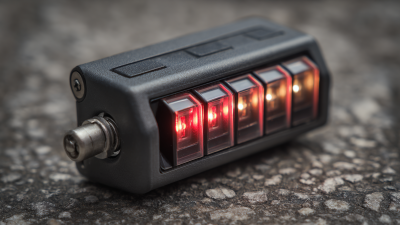
2026 Best On Off On Rocker Switch for Global Buyers

Choosing the 2026 Best On Off On Rocker Switch for Global Buyers takes more than comparing prices. This compact control can direct a device between two functions, with a center-off position on many models. The exact operation depends on its wiring and circuit design. Check the manufacturer’s diagram, not just the product photo.

Engineering author Henry Petroski’s phrase “Form follows failure” offers a useful design lens. It is not a rocker-switch-specific quotation or product endorsement. Applied here, it prompts buyers to consider what could go wrong: a poor fit, an unsuitable electrical rating, or contacts exposed to demanding conditions. Small details matter. A switch that looks identical may have different terminal layouts, mounting dimensions, or environmental ratings. Confirm each against the datasheet and the equipment it will serve.

This guide examines practical selection points for the On Off On Rocker Switch, including circuit configuration, current and voltage ratings, panel cutout, actuator feel, materials, and supplier documentation. It also considers availability and quality consistency across regions, while avoiding the assumption that one model suits every application. Check the specifications. Verify the fit. A careful comparison helps, though it cannot replace application-specific review. Some listings leave details unclear; that is worth noticing, not guessing around.
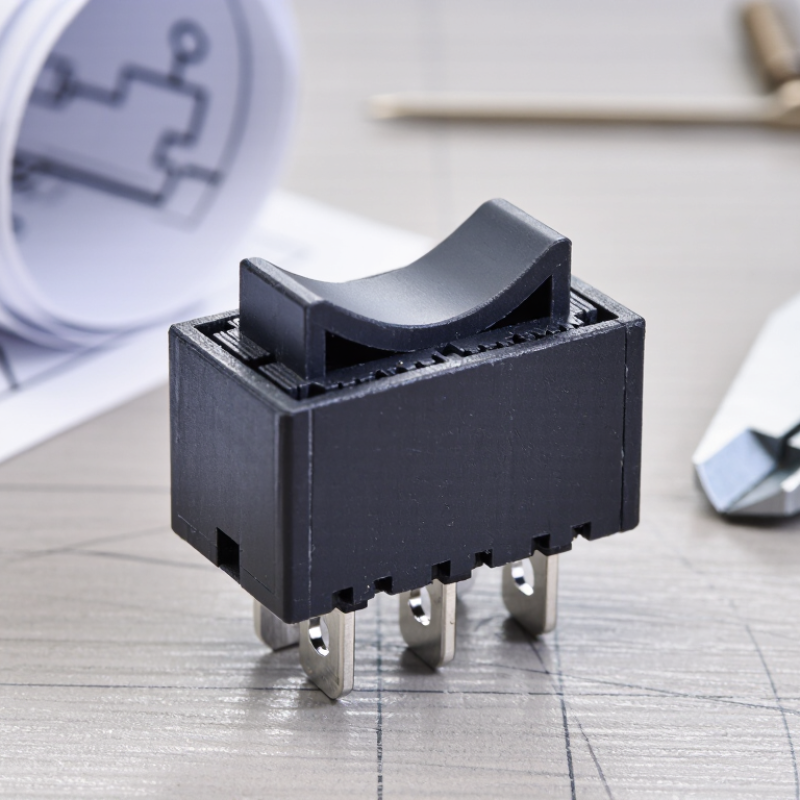
2026 Best On Off On Rocker Switch for Global Buyers

What Is an On-Off-On Rocker Switch?

An on-off-on rocker switch has three stable positions: one circuit selected, a center-off position, and another circuit selected. Rocking the actuator one way connects one set of contacts; moving it the other way selects a different set. The center position disconnects the switched paths. It is not simply a standard on-off switch with an extra click.

The exact function depends on the contact arrangement. A single-pole, double-throw design can route one common connection between two outputs, while a double-pole version can control two separate paths. Some switches are maintained in each position; others return from an end position when released. Check the product diagram and terminal labels rather than relying on the rocker shape. Easy to overlook.

For example, a panel switch might select between two operating modes, with the center position disabling both. The word “on” can be misleading: it describes the selected contact position, not necessarily the final behavior of the connected equipment. Confirm the voltage and current ratings, mounting dimensions, and whether the circuit needs momentary or maintained action. A close fit matters; a loose switch can shift when pressed. If the wiring diagram is unclear, pause and verify it before installation.

How Does an On-Off-On Rocker Switch Work?

An on-off-on rocker switch has three operating positions. The center position is off. Rock the actuator one way, and its internal contact connects a common terminal to one output. Rock it the other way, and the common terminal connects to a different output. It is often a single-pole, double-throw design, but terminal layouts vary. That small detail matters.

Inside, a spring-loaded mechanism moves a conductive contact between terminals. You may hear a soft click and feel the rocker settle at each position. In the center, neither output is connected on many maintained models. Some versions are momentary, so the rocker returns when released. Do not assume by appearance alone. Check the switch’s wiring diagram and test continuity with power disconnected before installation.

This arrangement can select between two circuits or operating modes, such as low and high settings in suitable equipment. The switch does not regulate power; it only changes the connection path. Match its voltage, current, terminal type, and mounting dimensions to the application. For global buyers, markings and wiring conventions may differ across suppliers. A clear datasheet helps, though it can still leave questions about illumination or terminal numbering. Verify those details with the manufacturer before wiring.

2026 Best On Off On Rocker Switch for Global Buyers - How Does an On-Off-On Rocker Switch Work?

Topic Typical Configuration How It Works Buyer Considerations
Switch positions Three positions: ON–OFF–ON The rocker selects one of two ON positions, with a center OFF position between them. The center position usually leaves the switched circuit open. Confirm that the center position is OFF and check whether the switch is momentary or maintained.
Common SPDT arrangement Single Pole, Double Throw (SPDT) One common terminal is connected to one of two output terminals, depending on the rocker position. In the center position, neither output is connected to the common terminal. Check the terminal diagram; terminal locations and markings can differ between models.
Common DPDT arrangement Double Pole, Double Throw (DPDT) Two separate circuits are switched together. Each pole can select between two connections, with a center-off position where both circuits are open. Useful when two conductors or circuits must change state together. Verify the wiring diagram and pole arrangement.
Typical circuit uses Two-way selection with an OFF state Depending on the wiring, the two ON positions can select between two loads, directions, or circuit paths. The switch itself does not determine the application. Choose a switch whose contact configuration matches the intended circuit; do not assume every ON–OFF–ON switch provides reversing.
Maintained or momentary action Maintained positions are common; momentary versions are also available A maintained rocker stays in the selected position. A momentary rocker returns to a specified position when released. Check the product specification for action type and return behavior, especially for control or safety-related circuits.
Electrical rating Varies by switch design and load type Voltage and current limits depend on the contacts, materials, construction, and whether the load is AC or DC. Use the manufacturer’s stated rating for the actual load. Motors, lamps, and other inrush loads may require additional rating checks.
Panel and environmental fit Mounting dimensions and protection levels vary Rocker switches are offered in different panel cutout sizes, terminal styles, and levels of protection against dust or water. Check cutout dimensions, panel thickness, connector type, operating temperature, and any stated IP rating.
Basic selection checklist Function, poles, rating, mounting, and terminals A suitable switch combines the required ON–OFF–ON contact action with compatible electrical and mechanical specifications. Review the datasheet and wiring diagram before installation. Isolate power and follow applicable electrical codes.
Ratings, terminal layouts, and available protection features are model-specific. Always verify them in the switch’s datasheet before purchase or installation.

Which Types and Specifications Matter in 2026?

For global buyers, “on-off-on” describes two powered positions separated by an off position, but it does not define the circuit. Choose SPDT for one shared input switching between two outputs; choose DPDT when two circuits must switch together. Maintained and momentary actions also behave differently. A momentary rocker returns when released, which can change how a machine operates. Small detail. Big consequences.

Match the switch to the actual load, not just the panel label. Check AC or DC voltage, current, resistive or inductive load, terminal type, panel cutout, and operating temperature. IEC 61058-1:2016 covers appliance switches rated up to 480 V and 63 A; those are scope limits, not recommended ratings for every rocker switch. Ask suppliers for the rated-load conditions and endurance-test results. The IP code, defined by IEC 60529, helps compare protection against dust and water. A higher number is not automatically better if the switch will sit behind a sealed panel. Honestly, a neat-looking specification sheet can still leave out the detail that matters: the load type. Check the datasheet, sample fit, and wiring diagram before approving a large order.

How Can Global Buyers Compare Switches for Their Applications?

2026 Best On Off On Rocker Switch for Global Buyers

Global buyers should compare an on-off-on rocker switch by circuit function, not appearance alone. Check whether the center position disconnects power and whether each side changes polarity or selects a separate circuit. Then match the switch’s voltage, current, pole count, and terminal layout to the equipment schematic. A switch marked 16 A may have a lower rating for DC loads; confirm the rating at the actual voltage and load type. Small details matter. A 6.3 mm spade terminal will not fit a 4.8 mm harness without an approved change.

Use IEC 61058-1 as a reference for switch safety and test requirements, then request the supplier’s test documentation for the exact model. The WSTS Autumn 2024 forecast projected semiconductor sales growth of 19% in 2024, a reminder that electronics supply conditions can shift quickly; it does not establish rocker-switch availability. Ask for production lead time, material details, and traceable lot records. For outdoor or washdown equipment, compare ingress protection and temperature limits, not just the housing’s appearance.

A practical check is to test the sample in its intended panel. Feel for a positive detent, inspect clearance behind the terminals, and verify the center-off state with a meter. Some buyers overlook mounting-hole tolerances. I would, too, unless the drawing gives a clear dimension and tolerance. Keep the wiring diagram and test results with the purchase record so replacements can be compared accurately.

What Safety Standards and Installation Factors Should Buyers Check?

2026 Best On Off On Rocker Switch for Global Buyers

What Safety Standards and Installation Factors Should Buyers Check?

An ON-OFF-ON rocker switch has two active positions and a central off position. Check that its voltage and current ratings suit the actual circuit, not just the equipment’s headline rating. Motor loads, lamps, and other inductive loads may create high starting currents. Confirm the switch is rated for that load type. Small details matter.

Ask suppliers for test reports and certification documents that match the exact switch model. IEC 61058-1 covers switches for appliances, but it may not apply to every panel or end use. Requirements vary by destination and application, so verify the relevant standard with a qualified safety professional. Inspect the switch body for clear ratings, terminal labels, and any required approval marks. A mark alone is not enough; documentation should be traceable.

Installation details matter just as much. Check the panel cutout, mounting depth, terminal clearance, wire gauge, and connection diagram before ordering. Disconnect power before wiring, and use a qualified installer where required. Poorly secured terminals can loosen under vibration or heat. A detail buyers sometimes overlook: confirm whether the center position disconnects all intended circuits.

Tips: Photograph the wiring before replacement. Follow the manufacturer’s diagram, use insulated terminals, and test each switch position safely after installation.