Top 10 Push Button Switch Types You Need to Know?
In today's fast-paced technological landscape, understanding the various types of Push Button Switches is crucial for designers and engineers alike. According to a report by Industry Research, the global push button switch market is projected to reach USD 2.8 billion by 2027, growing at a CAGR of 5.6%. This growth highlights the significance of these components in electronic applications.
Expert David Liu, a leading figure in electrical engineering, states, “The right push button switch can enhance product reliability and user experience.” His insight is pivotal, especially when choosing among the available types. Each push button switch serves a unique function; therefore, looking deeper into these options can prevent costly design errors.
Moreover, not all switches are equally reliable. Some manufacturers prioritize aesthetics over functionality, which can compromise safety. Buyers must ask tough questions. Is the switch truly suitable for its intended purpose? This introspection is essential for making informed decisions. A well-chosen Push Button Switch can not only streamline operations but also improve overall device performance.
Overview of Push Button Switches and Their Applications
Push button switches are essential components in various devices. They provide user-friendly interfaces for both industrial and consumer applications. In recent reports, the demand for push button switches is projected to grow by 8% annually. This growth is powered by advancements in automation and smart technology.
Common applications include home appliances, machinery, and automobiles. In industrial settings, these switches enhance operational efficiency. For instance, they are often used in control panels for easy access. Their tactile feedback ensures users are aware of their actions. Interestingly, not all designs meet safety standards. Some switches lack proper insulation, leading to electrical hazards.
The versatility of push button switches makes them popular. However, design flaws can lead to user frustration. Many switches fail to provide adequate durability. According to a survey, 15% of users report issues related to performance. It is crucial for manufacturers to address these concerns to ensure user satisfaction. Understanding the limitations of various types can aid in choosing the right switch for specific needs.
Types of Push Button Switches: A Comprehensive Guide
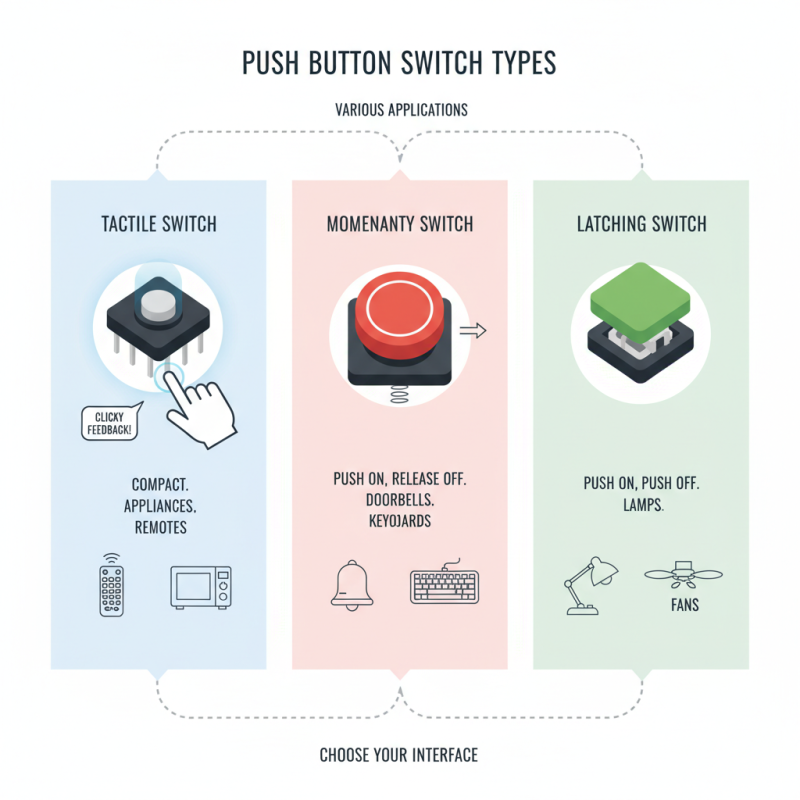
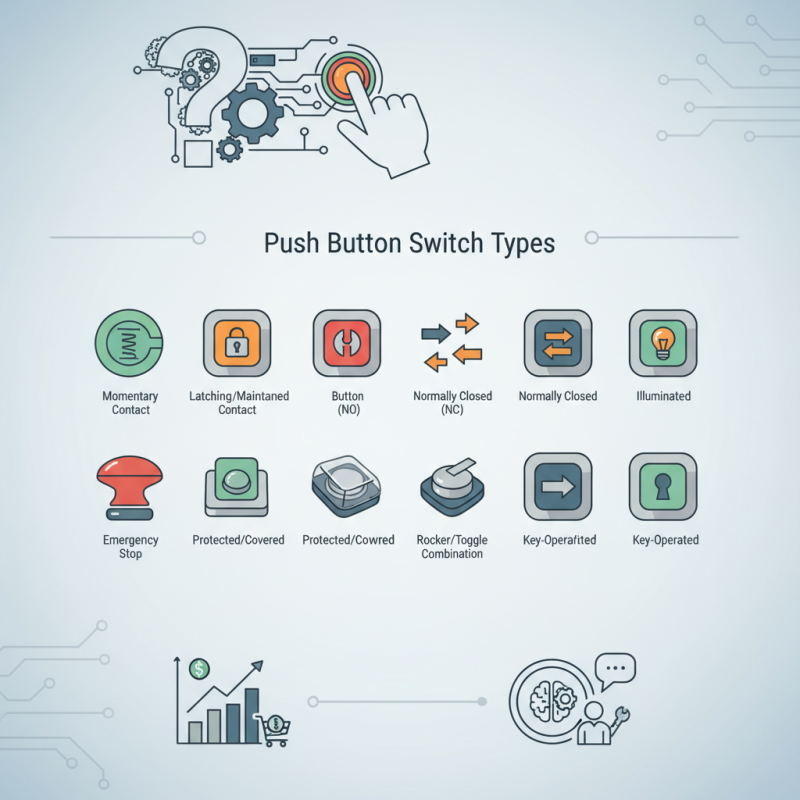
Push button switches come in various types, each tailored for specific applications. The tactile switch is common in many devices. It offers a satisfying click, providing feedback when pressed. These switches are often found in household appliances and remote controls. Their compact design makes them easy to integrate.
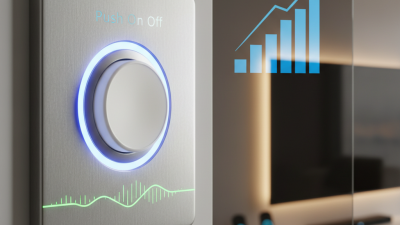
Another type is the illuminated push button switch. This switch features a light that activates when pressed. It's beneficial for visibility in low-light conditions. Users appreciate the illuminated aspect during night-time use. However, the lights can sometimes be too bright. This can be distracting, so careful placement is essential.
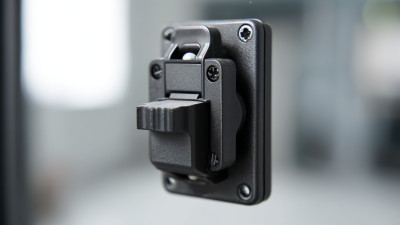
Lastly, we have the toggle switch. This type resembles a small lever that changes state when pushed. It is often used for on/off functions. While straightforward, many overlook how they can wear out over time. Frequent use can lead to failure, which is something to consider. When selecting a push button switch, it's crucial to assess the environment and frequency of use. This ensures a reliable choice that meets your needs.
Key Features to Consider When Choosing Push Button Switches
When selecting push button switches, certain features should guide your decisions. The switch's size and shape can greatly affect usability. A compact design may fit into tighter spaces but could be harder to manipulate. Consider how your application will influence your choice.
Another crucial element is the switch's actuation force. Some switches require a gentle press, while others need more force. Test different types to find what feels right for your needs. The feedback a switch provides, such as tactile or audible clicks, contributes to the user experience.
**Tips**: Always account for environmental factors. Will the switch face moisture? Is there a risk of dust? If so, look for switches with protective ratings. Easy installation is key, too. Some designs simplify the process, saving time and frustration. Keep a list of your must-haves; it can help narrow down options effectively.
Top 10 Push Button Switch Types You Need to Know
| Switch Type |
Key Features |
Best Use Cases |
| Momentary Push Button |
Activates when pressed, returns to original position |
Controls for electronics, start/stop buttons |
| Latching Push Button |
Stays in position until pressed again |
On/off switches for appliances and lights |
| Illuminated Push Button |
Integrated LED for visual feedback |
Indicators for machines, low-light environments |
| Sealed Push Button |
Water and dust resistant |
Outdoor and industrial applications |
| Capacitive Touch Switch |
Works with touch, no mechanical action |
Smart home devices, sleek designs |
| Micro Push Button |
Small size, suitable for compact spaces |
Remote controls, small electronics |
| Emergency Stop Switch |
A prominent button for emergency situations |
Industrial machines, safety control |
| Mushroom Push Button |
Large, easy to press, often red |
Heavy machines, emergency stops |
| Toggle Switch Button |
Switches between two states |
Devices needing consistent booleans, like lights |
| Key Switch Push Button |
Requires a key to operate |
Security systems, restricted access |
Installation and Maintenance Tips for Push Button Switches
When installing push button switches, precision is crucial. Having the right tools can make a significant difference in ease and accuracy. A recent industry report states that improper installation can lead to a 30% increase in maintenance needs. Ensure that the switch is appropriately rated for the application to avoid faulty operations. Wire connections should be secure, but over-tightening can damage components.
Regular maintenance is essential to prolong the life of push button switches. Dust and grime can build up, impacting functionality. A study from the Electrical Safety Organization highlights that 25% of failures in electronic components come from poor maintenance. Cleaning switches every few months using appropriate materials can prevent this. Many users overlook this simple practice, leading to unnecessary replacements. Additionally, visual inspections can catch potential issues early.
Safety Standards and Regulations for Push Button Switches
When considering push button switches, safety standards are paramount. Various organizations, such as UL and IEC, have defined key regulations. Push button switches must meet specific voltage ratings and environmental conditions. For instance, a report from the International Electrotechnical Commission (IEC) notes that compliance with these standards reduces failure rates and enhances user safety.
Tips: Always check for certification marks on switches. This ensures they meet necessary safety standards before installation.
Moreover, the National Fire Protection Association (NFPA) highlights that faulty switches can lead to electrical fires. Regular maintenance and inspections are vital. Many industry professionals recommend a strict adherence to installation guidelines to avoid potential hazards.
Tips: Keep a log of maintenance checks. This can help identify recurring issues.
The use of poor-quality switches can result in serious accidents. Hence, investing in reliable components pays off in the long term. Ignoring quality could mean jeopardizing safety. Always prioritize safety standards in your selection process.