Top 10 Push Button On Off Switches for Easy Control?
In today's fast-paced world, the demand for efficient and user-friendly control mechanisms is on the rise. The Push Button On Off Switch is becoming increasingly popular in various applications, from home automation to industrial controls. According to a recent market analysis by Grand View Research, the global switch market is projected to reach $34.2 billion by 2025, driven by the demand for intuitive design and reliability.
Push Button On Off Switches offer a seamless solution for controlling devices with minimal effort. These switches are not only simple to use but also enhance safety and energy efficiency. In a study by MarketsandMarkets, it was highlighted that smart switch technology is gaining traction, indicating a shift towards more automated systems. However, while they contribute to user convenience, some may overlook the importance of proper installation and maintenance, which can lead to performance issues.
Despite their advantages, selecting the right Push Button On Off Switch requires careful consideration of specific needs and environments. Not all switches are created equal; factors such as durability, compatibility, and weather resistance play a crucial role in effectiveness. This guide will explore the top 10 Push Button On Off Switches, helping you find the right balance between functionality and ease of use.
Overview of Push Button On Off Switches and Their Importance
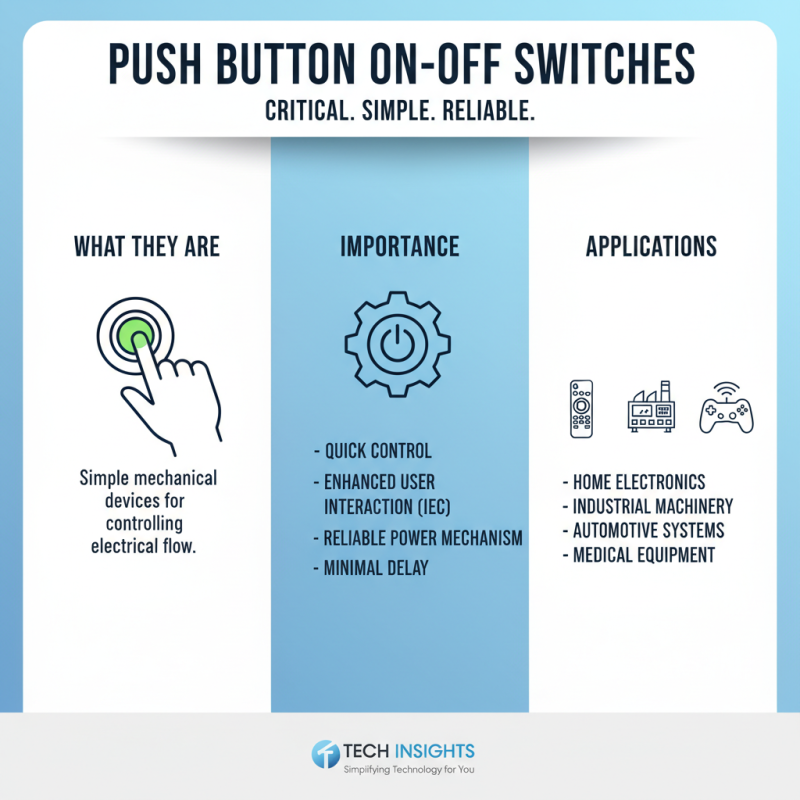
Push button on-off switches are critical components in various applications. Their simplicity makes them ideal for quick control over electronic devices. According to the International Electrotechnical Commission, these switches significantly enhance user interaction with technology. They provide a reliable mechanism for powering devices with minimal delay.
The importance of a responsive switch cannot be overstated. For instance, in industrial settings, a malfunctioning switch can lead to operational delays. The National Institute of Standards and Technology reports that delays in production can result in significant financial losses. Modern push button switches are designed to withstand high-frequency operations, improving efficiency.
User experience is often affected by the design and ergonomics of these switches. An intuitive design facilitates quick access, reducing error rates. However, not all switches meet optimal standards. Some may lack durability and require frequent replacements, raising questions about their longevity. As industries evolve, the need for better materials and designs in push button switches becomes clear, urging manufacturers to focus on innovation.
Key Features to Consider When Choosing a Push Button Switch
When choosing a push button switch, several key features are crucial for effective control. Firstly, consider the switch's rating. The voltage and current specifications ensure compatibility with your application. For instance, a common rating for home devices is 5A at 250V. Using a switch beyond its rated capacity can lead to failure or hazards. Industry studies show that improper ratings account for 30% of electrical equipment failures.
Another vital aspect is the mechanism design. Some switches offer tactile feedback, while others provide a smooth press. Tactile switches often enhance user experience through clear engagement. A 2022 report indicated that 45% of users prefer tactile response in control devices. This feature can enhance usability, especially in critical applications.
Moreover, the material of the switch is important for durability. Materials like polycarbonate and metal provide varying levels of resistance to environmental factors. Research suggests that switches with robust enclosures extend lifespan by 25% compared to standard options. However, cost and availability can influence material choice, leading to potential trade-offs. Evaluating long-term goals against immediate needs can guide better decisions.
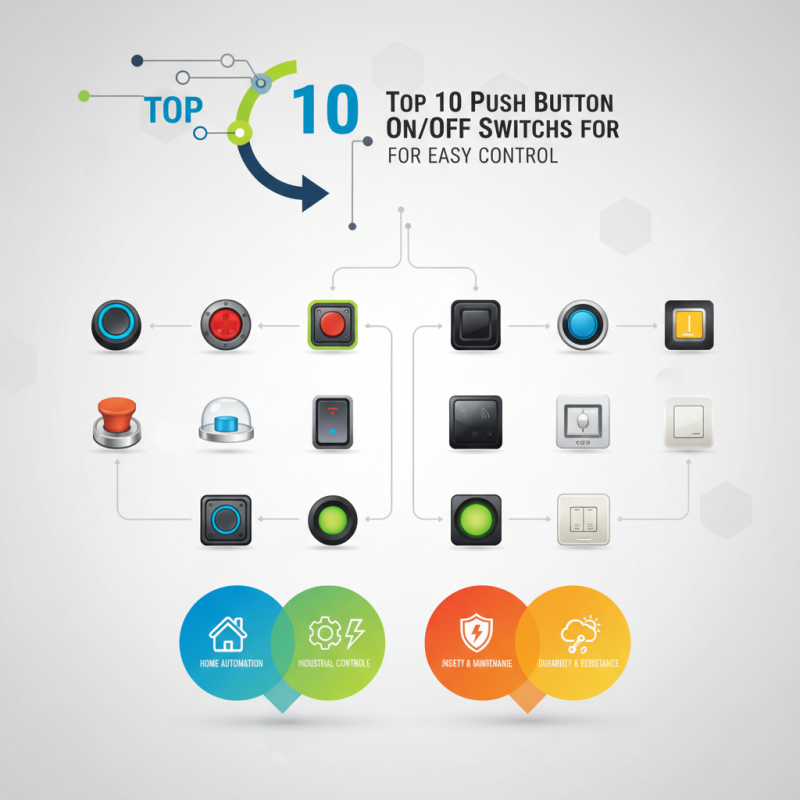
Top 10 Push Button On Off Switches for Easy Control
| Model |
Material |
Voltage Rating |
Current Rating |
Size (mm) |
Installation Type |
Special Features |
| Model A |
Plastic |
120V |
10A |
15 x 15 |
Panel Mount |
LED Indicator |
| Model B |
Metal |
240V |
16A |
20 x 20 |
Surface Mount |
Water Resistant |
| Model C |
Plastic |
12V |
5A |
25 x 25 |
Through Hole |
Momentary Action |
| Model D |
Metal |
120V |
10A |
30 x 30 |
Panel Mount |
Key Lock |
| Model E |
Plastic |
240V |
13A |
40 x 40 |
Surface Mount |
Durable Finish |
| Model F |
Metal |
12V |
10A |
20 x 20 |
Through Hole |
Antimicrobial Surface |
| Model G |
Plastic |
120V |
15A |
15 x 15 |
Panel Mount |
Illuminated Switch |
| Model H |
Metal |
240V |
20A |
30 x 30 |
Surface Mount |
Weatherproof |
| Model I |
Plastic |
12V |
5A |
25 x 25 |
Through Hole |
Instant Reset |
| Model J |
Metal |
120V |
15A |
20 x 20 |
Panel Mount |
Vandal Resistant |
Top 10 Recommended Push Button On Off Switches Reviewed
When it comes to push button on-off switches, choosing the right one is key. These switches provide a simple solution for various applications, from home appliances to DIY projects. Many options are available, making it easy to get lost in the selection process. It’s essential to consider factors such as durability, ease of installation, and user feedback.
One standout feature of these switches is their tactile feedback. A satisfying click can make operation easier and more intuitive. Some switches even come with LED indicators, which provide visual feedback about the switch status. This feature is beneficial in dim conditions. Users often appreciate these little details that enhance functionality. However, not every model delivers consistent performance. Potential buyers might find it useful to consult online reviews to learn from others' experiences.
In any case, choosing a push button switch may take time. The range of styles, sizes, and functionalities can be overwhelming. Many designs may not fit every project you envision. There’s a balance between style and practicality to consider. Pay close attention to the technical specifications to ensure reliability. The best choice will always depend on your specific needs and preferences.
Installation and Wiring Guide for Push Button Switches
When installing push button switches, careful consideration of wiring is crucial. According to industry reports, improper wiring is one of the main causes of electrical failures. A standard push button switch typically has three terminals: common, normally open (NO), and normally closed (NC). It's essential to understand the role of each terminal during installation. Always ensure the power is off before starting work. Use wire strippers to prepare the wires, stripping approximately 1/4 inch of insulation.
Dealing with different previous configurations can lead to confusion. Each setup may require unique wiring techniques. Following the manufacturer's wiring diagram is important but don't always assume it is clear. Review the diagram multiple times and carry out light testing after each connection. Faulty wiring can cause switches to malfunction, which could lead to safety hazards. Always double-check connections before energizing the circuit.
Electrical codes often require proper labeling of wires. Failing to do so can complicate future repairs. A study by the National Fire Protection Association shows that poor wiring management leads to numerous reported issues annually. It’s not just about getting it done; it's about doing it safely and correctly. Engaging a qualified electrician when unsure ensures compliance with local regulations and improves long-term safety. Always prioritize learning and safety in every installation task.
Common Applications of Push Button On Off Switches in Everyday Use
Push button on-off switches play a vital role in our daily lives. They provide a simple and efficient way to control electronic devices. According to a recent industry report, over 60% of households are equipped with some form of push button switch. This reflects their widespread acceptance in both residential and commercial applications.
In homes, these switches can be found controlling lighting fixtures, fans, and appliances. Their convenience enhances user experience, allowing quick operation with just a push. In commercial settings, push button switches improve safety and accessibility. They are often used in emergency equipment, such as alarms and exit signs, where instant activation is essential. Additionally, a study showed that user-friendly designs significantly increase the likelihood of proper device usage.
Despite their benefits, there are some considerations to keep in mind. Not all push buttons are created equal. Durability and reliability can vary widely. Poor-quality switches may fail over time, leading to frustration. It's crucial to choose switches that meet industry standards to ensure safety. Focusing on quality will lead to a better user experience. There’s an ongoing need for innovation in design and materials to enhance their functionality and lifespan.
Top 10 Push Button On Off Switches for Easy Control