2026 How to Choose the Best Momentary Push Button Switch?
Selecting the right momentary push button switch can be a challenging task. The market is flooded with options. According to a report by MarketsandMarkets, the global push button switch market is expected to reach $3.1 billion by 2026, reflecting a growing demand across various industries. As technology evolves, understanding the nuances of these switches becomes imperative.
Industry expert Dr. Leslie Chen states, “Choosing a momentary push button switch requires careful evaluation of application and reliability.” This highlights the importance of considering both the environment and usage when selecting a switch. A poorly chosen switch may lead to operational failures, increased costs, and safety risks.
With advancements in design and materials, the selection process must also consider factors like switching life, actuation force, and electrical ratings. The growing complexity of devices means that one size does not fit all. Therefore, users must conduct thorough research to find the most suitable momentary push button switch for their specific needs. Overlooking these details can lead to regrettable decisions in product performance.
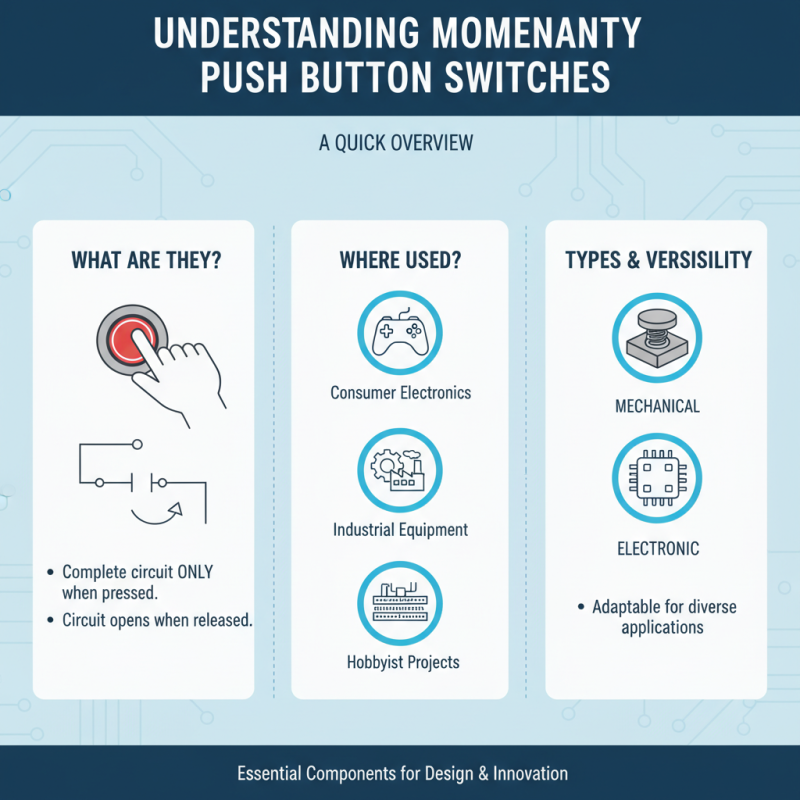
Understanding Momentary Push Button Switches: A Quick Overview
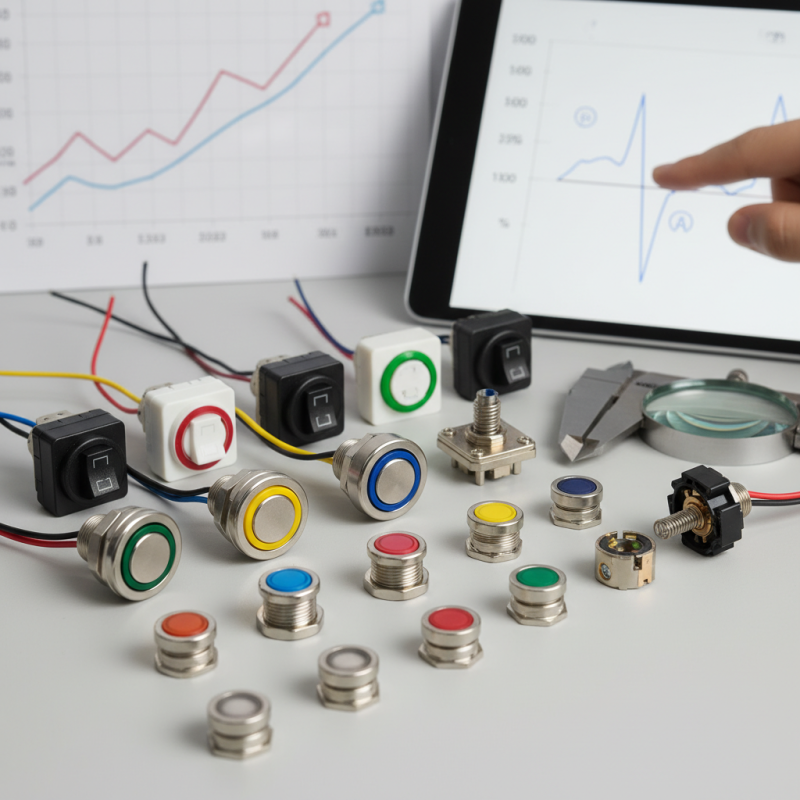
Momentary push button switches are essential components in various applications, from consumer electronics to industrial equipment. These switches are designed to complete a circuit only while being pressed. Understanding their functioning is crucial for any designer or hobbyist. They can be mechanical or electronic, making them versatile for different uses.
When selecting a momentary push button switch, consider the specifications that suit your project. The switch's current rating is critical. It must handle the required load without overheating. Also, think about the activation method. Will you need a tactile feedback switch, or will a soft-touch option suffice? The actuating force and life cycle of the switch can greatly affect usability. It’s vital to choose one that feels right and lasts long.
Visualizing how the switch integrates into your design environment helps in making the right decision. Missteps can occur if you overlook the mounting type or the switch's size. Always remember, even a small switch can greatly impact overall functionality. So, take the time to reflect on your options and ensure you’re making an informed choice.
Key Factors to Consider When Selecting a Push Button Switch
When selecting a momentary push button switch, several key factors should be considered. Understanding the environment where the switch will operate is vital. Factors like temperature, moisture, and exposure to dust can influence the switch's lifespan. A switch that performs well in a clean indoor environment may fail outdoors.
Next, the electrical specifications must align with your project needs. Voltage and current ratings are essential. Knowing the required actuation force can help avoid excessive wear, especially in high-use applications. Some users overlook the importance of tactile feedback. A switch should provide a satisfying feel during operation.
Lastly, consider the mounting type and size. A poorly sized switch may not fit well, affecting both form and function. Some applications may require aesthetic consideration, while others prioritize durability over looks. Testing multiple options can lead to better decision-making. Even with all this knowledge, mistakes can happen. It's essential to evaluate each choice critically.
2026 How to Choose the Best Momentary Push Button Switch? - Key Factors to Consider When Selecting a Push Button Switch
| Attribute |
Description |
Example Values |
| Actuation Type |
The mechanism used to operate the switch. |
Momentary, Latching |
| Contact Configuration |
The arrangement of electrical contacts designed for the switch. |
SPST, DPST |
| Current Rating |
The maximum current the switch can handle safely. |
0.5A, 5A, 10A |
| Voltage Rating |
The maximum voltage the switch can control. |
12V, 24V, 120V |
| Mounting Type |
How the switch is installed in the application. |
Panel Mount, PCB Mount |
| Size and Shape |
Physical dimensions and form of the push button switch. |
Round, Square, Rectangular |
| Material |
The materials used in the construction of the switch. |
Plastic, Metal, Rubber |
| IP Rating |
The degree of protection against dust and water. |
IP65, IP67 |
Different Types of Momentary Push Button Switches Explained
When selecting momentary push button switches, it's essential to understand the different types available. The most common types are normally open (NO) and normally closed (NC) switches. NO switches complete the circuit when pressed, while NC switches break the connection. According to industry reports, NO switches are favored in applications like doorbell and alarm systems, accounting for approximately 65% of use cases.
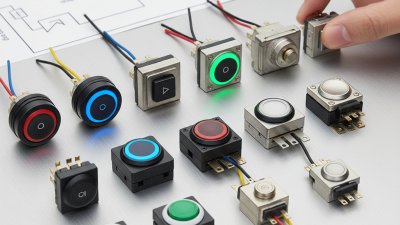
Tactile switches are also popular, especially in consumer electronics. These switches provide tactile feedback, enhancing the user experience. Research shows that tactile feedback can improve user interaction by up to 30%. Additionally, illuminated push buttons are useful for visibility in low-light settings. Their usage has risen significantly, reflecting the increased focus on user-friendly designs in modern technology.
It's important to consider the material and design of these switches. Plastic components may be less durable than metal ones, leading to potential failures in harsh environments. Some reports indicate that the failure rate for low-quality plastic switches can exceed 15%. This raises questions about reliability and long-term usage. Choosing the right type involves weighing factors like durability, feedback, and intended use, which often requires careful analysis and reflection on specific needs.
Technical Specifications to Assess in Push Button Switches
Choosing the right momentary push button switch involves understanding key technical specifications. One critical factor is the switch's electrical rating, which determines its operating limits. According to industry reports, switches typically handle voltages from 12V to 250V and currents up to 16A. Selecting a switch that matches your device’s requirements ensures safety and performance.
Another important specification is the actuation force. This varies widely, from light touch to firm pressure, impacting user experience. Studies indicate that switches requiring lower actuation forces are favored in consumer electronics, while higher forces may be preferred in industrial applications for tactile feedback. Consider the environment where the switch will be used. Extreme temperatures or exposure to moisture can affect performance.
Tips: Test multiple switches before deciding. Look for compliance with standards like IEC 60947 or UL 508 for reliable operation. Always check for durability ratings; a switch rated for over 1 million cycles offers better longevity. It’s worth noting that not every switch will perform flawlessly in all situations. Assessing user feedback can provide insights but may also reveal discrepancies between specifications and real-world use.
Applications and Usages of Momentary Push Button Switches
Momentary push button switches are critical components in many electronic devices. Their applications span across various fields, from consumer electronics to industrial machinery. These switches act as control points, delivering signals to initiate actions or control processes.
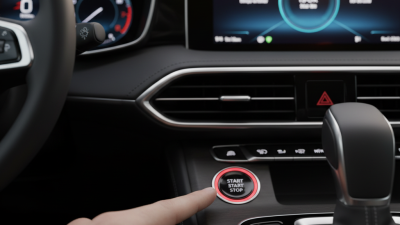
In the automotive sector, such switches are used for functions like starting engines or controlling headlights. According to industry reports, the automotive push button switch market is projected to reach $6 billion by 2025, reflecting significant demand. In consumer electronics, these switches allow users to interact seamlessly with devices. Their reliability and compact size make them suitable for remote controls, gaming consoles, and more.
Tips: When selecting a momentary push button switch, consider factors like voltage rating and durability. Testing different prototypes can sometimes yield unexpected results. Always analyze how usage affects longevity.
In industrial applications, momentary push buttons control machines and assembly lines. They help ensure safety and efficiency. Reports indicate a growing trend towards automation, leading to increased usage of these switches. However, not all designs are foolproof. Adverse conditions like dust, moisture, and wear can impact functionality. Regular maintenance is necessary to ensure optimal performance. Always question if the chosen switch can withstand the operational environment.
Applications and Usages of Momentary Push Button Switches