How to Choose the Best Push Button On Off Switch for Your Needs?
Choosing the right Push Button On Off Switch can significantly impact your project's success. According to Jack Thompson, an industry expert with over 20 years of experience, "A push button switch is not just a simple component; it’s the heartbeat of your device." This statement highlights the importance of selecting a switch that meets your specific needs.
Understanding the different types of Push Button On Off Switches is crucial. Some are designed for heavy-duty applications, while others work best in light-duty settings. Consider the environment in which your switch will operate. Factors like moisture, dust, and vibration can influence your choice. We often overlook how these details matter in real-world applications.
It’s also important to think about usability. The switch's size, feel, and feedback can affect user experience. A poorly placed button might frustrate users. Hence, reflecting on your requirements and gathering reliable information is key. Making the right choice can ensure safety and functionality in any project.

Factors to Consider When Selecting a Push Button On Off Switch
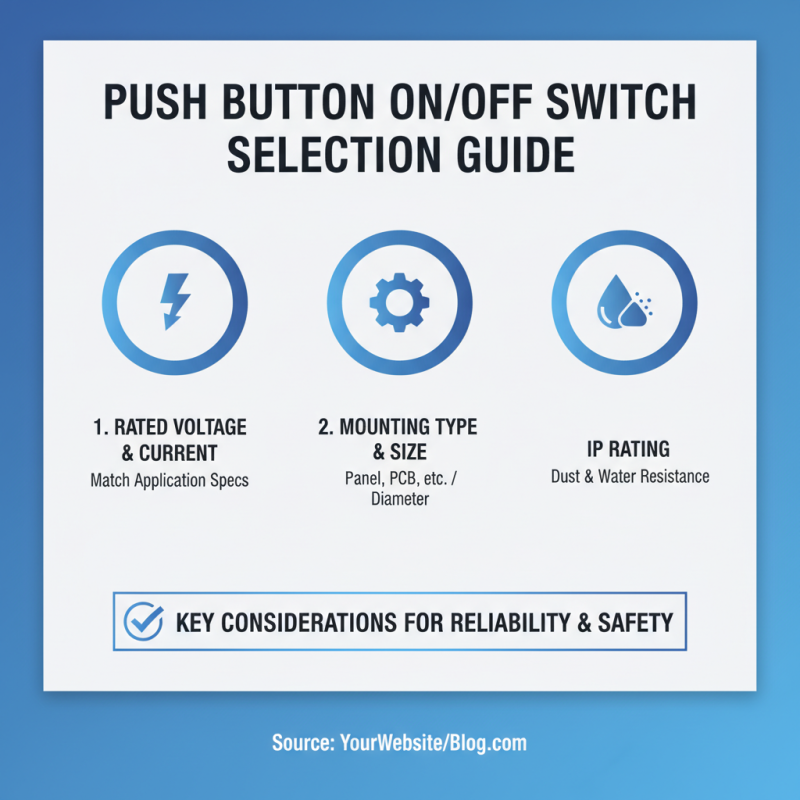
Choosing the right push button on/off switch involves several key factors. Understanding these considerations will help you find the best option for your project. One crucial factor is the switch's rated voltage and current. Ensure the specifications match your application's requirements. An inadequate rating could lead to malfunctions or even hazards.
Material is another essential aspect. Switches can be made of plastic or metal. Metal options often provide better durability and aesthetics. However, they may be less suitable for certain environments. For instance, plastic switches may be preferred for outdoor use due to their resistance to corrosion. Think about the installation process too. Some switches require more complex setups than others.
Tips: When evaluating switches, consider their tactile feedback. A switch that feels solid gives users confidence. Also, examine the switch's lifespan and reliability. A longer-lasting switch might save you money in the long run. Engage with different types before your final decision. Your hands-on experience can provide insights that specifications won't. Remember, the right switch can improve functionality.
Understanding Different Types of Push Button Switches Available
When selecting a push button on-off switch, understanding the different types available is crucial. Push button switches can be classified into momentary and latching types. Momentary switches activate only when pressed. They are often used in applications that require temporary activation, such as doorbells or starters. According to a report from Global Market Insights, the momentary switch segment is expected to grow significantly in the next few years.
Latching switches, on the other hand, maintain their state once activated. They are ideal for applications like machinery controls or lighting systems. Many industry experts emphasize the increasing need for latching switches as more devices require an ON/OFF capability without constant pressure. A report from Research and Markets revealed that latching switches hold a significant market share due to their durability and convenience.
Another factor to consider is the switch's size and ratings. Not all switches are suited for high power applications. A switch's voltage and current ratings are critical for safety and functionality. Choosing the wrong type can lead to failures or hazards. Therefore, carefully assessing these specifications, along with the application needs, is fundamental for effective decision-making in switch selection.
How to Choose the Best Push Button On Off Switch for Your Needs?
| Switch Type |
Operation Style |
Current Rating |
Voltage Rating |
Application |
| Momentary Push Button |
Momentary |
1A |
12V |
Control Circuits |
| Latching Push Button |
Latching |
2A |
24V |
Power Equipment |
| Illuminated Push Button |
Momentary |
0.5A |
120V |
Indicators |
| Weather-resistant Push Button |
Latching |
5A |
48V |
Outdoor Applications |
Evaluating the Voltage and Current Ratings for Your Application
Choosing the right push button on/off switch requires careful consideration of voltage and current ratings. These ratings determine how much electrical load the switch can effectively handle. According to a report from the National Electrical Manufacturers Association, 73% of electrical faults are related to improper component ratings. This underscores the importance of selecting a switch that aligns with your applications.
Voltage rating is crucial. Exceeding this limit can lead to switch failure or even hazards like arcing. For instance, a switch rated for 120V cannot safely handle 240V loads. Current rating is similarly important; exceeding it can cause overheating. The Occupational Safety and Health Administration warns that this can lead to equipment failure or fires. Always consult the specifications provided by reputable sources. Knowing the electrical requirements of your devices helps in selecting the correct switch.
Common mistakes arise from inadequate evaluation. Many users choose switches based solely on size or design, overlooking specifications. Studies show that this often leads to unexpected downtime or increased maintenance costs. It’s essential to reflect on both current and potential future needs. Planning ahead can save time and resources, ensuring the switch will function properly over time. Understanding these factors is crucial for reliable operation.
Examining the Switch Design: Momentary vs. Latching Options
When selecting a push button on-off switch, the design is crucial.
Momentary switches activate only while pressed. This feature suits applications like doorbells or buzzers. They typically require constant pressure to function.
Think carefully about your project. If it requires temporary activation, a momentary switch is ideal.
On the other hand, latching switches maintain their state after being pressed. This means once you push them, they stay on or off until pressed again.
They are useful for applications like lighting or equipment control. The tactile feedback they provide gives users confidence in their selection.
However, latching switches may not be suitable for all situations. You may need to consider whether your usage calls for a simple on-off function or more complex control.
Choosing between these types requires an understanding of your needs.
Consider how often you will use the switch and for what purpose. It's essential to evaluate your environment as well.
Make sure it can withstand the conditions it will face. Reflect on your project requirements carefully.
Small details can significantly impact the switch's effectiveness.
Tips for Installation and Maintenance of Push Button Switches
When installing a push button switch, attention to detail is crucial. Proper placement and orientation can enhance usability and functionality. Data from the International Electrotechnical Commission indicates that improper installations can lead to a failure rate of up to 15%. This statistic stresses the importance of following installation guidelines closely. Ensure that the switch is mounted firmly and at a comfortable height for users.
During maintenance, regular checks are essential to ensure longevity. The Electrical Safety Foundation International recommends inspecting switches for signs of wear and tear. Dust buildup can also affect performance. It's wise to clean the switches periodically. Using a damp cloth and a mild cleaner can be effective. However, excessive moisture can be damaging.
Over time, you may find that the switch feels loose or unresponsive. This can signal a need for replacement rather than repair, as push button switches typically have a lifespan of around 10,000 cycles according to industry reports. Keeping a log of usage can help anticipate replacements and avoid unexpected failures. Thoughtful installation and diligent maintenance can greatly enhance the functionality of your switches.