Best Push Button On Off Switches for Easy Control Options?
In the dynamic world of electronics, the Push Button On Off Switch stands out for its simplicity and efficiency. John Smith, a renowned expert in electronic controls, once noted, "The right switch can change everything." This emphasizes the impact of choosing the best switch for your application.
Push Button On Off Switches offer an intuitive solution for controlling devices easily. Their design allows for a quick and reliable operation, making them ideal for various settings. Imagine a busy kitchen, where a swift push turns appliances on or off with ease. Such convenience significantly enhances workflow.
However, not all Push Button On Off Switches are created equal. Quality can vary greatly, and choices may overwhelm users. It's essential to evaluate options carefully. Some switches may not fulfill expectations or withstand heavy usage. Balancing price and performance requires thoughtful consideration. Understanding unique needs will guide toward the best choice, ensuring satisfaction and efficiency in everyday tasks.
Types of Push Button On Off Switches and Their Functionality
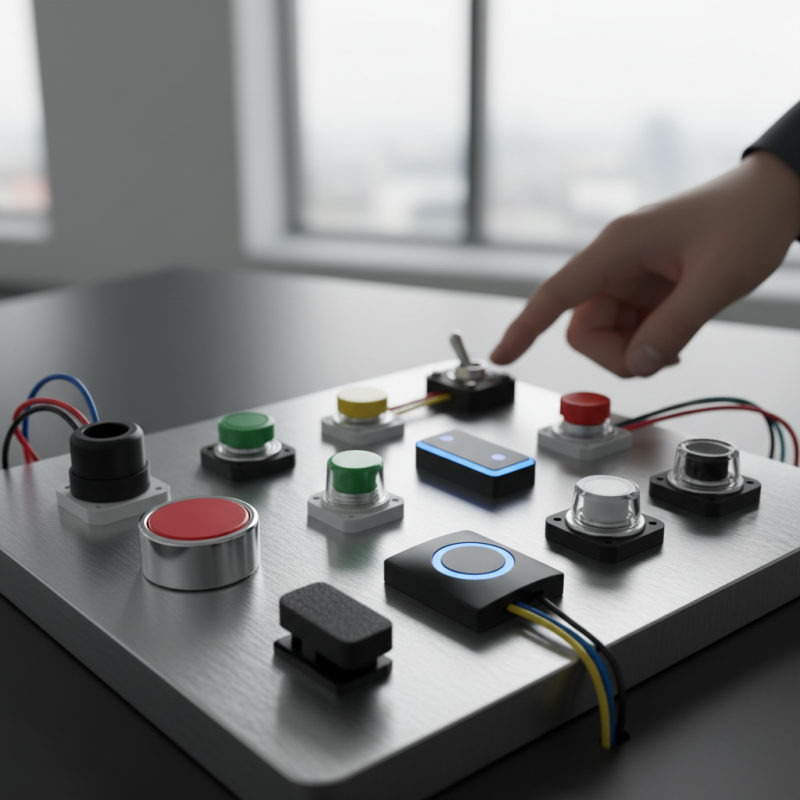
Push button on-off switches come in various types. Each type serves a unique purpose. The most common type is the momentary switch. This switch only remains on while being pressed. It’s great for applications requiring temporary activation. For example, it can control lights in hallways. However, it may not be ideal for devices needing a steady power supply.
Another type is the latching switch. This one stays on until pressed again. Users often find this more convenient. It works well in situations where constant control is needed. For instance, it’s perfect for turning appliances on or off remotely. But, remember, it might lead to accidental activations if not installed properly.
Consider rotary switches as another option. They rotate to various positions, offering multiple settings. This can be useful for fans or adjustable lighting. The tactile feedback is satisfying, but it may require more care in maintenance. Not every switch suits every need, so evaluating the environment and use will help.
Key Features to Look for in Push Button Switches
When considering push button on/off switches, several key features stand out. Durability is essential. Look for switches that can withstand high usage. Many are engineered for over 10,000 cycles. This ensures they remain reliable over time.
Another vital aspect is the switch's size and design. Compact designs fit well in various applications without taking too much space. Choose switches with clearly labeled functions for easy identification, especially in low-light environments. Backlit options are a plus here.
Tips: Always evaluate the rating of the switch. A switch with a higher voltage and current rating offers more flexibility. Additionally, check for compatibility with your existing systems. A mismatch can lead to malfunctions. Finally, consider tactile feedback. A switch that provides satisfying feedback can be easier to use.
Incorporating these features can greatly enhance user experience. However, do not overlook the importance of safety. Ensure that any push button switch you choose complies with electrical standards. This can help prevent hazardous situations in the long run. The choice of a switch shouldn’t just be about convenience. Always factor in quality and safety together.
Best Push Button On Off Switches - Key Features Comparison
Installation Tips for Push Button On Off Switches
When installing push button on-off switches, precision is key. Proper installation ensures safety and functionality. According to industry reports, improper installation can lead to failures in 20% of cases. This statistic emphasizes the importance of getting it right from the start.
Before starting the installation, ensure the power is off. Use a voltage tester to confirm. This simple step can prevent accidents. Also, make sure to read the user manual. Familiarity with the switch specifications is crucial. Many users overlook this, resulting in compatibility issues. Use wire connectors that fit securely. Loose connections can cause inconsistent performance.
After installation, test the switch multiple times. A functional check helps avoid surprises later. If issues arise, revisit your wiring connections. Many novices overlook potential mistakes in wiring. Observing small details can lead to improved functionality. If you're unsure, consult a professional for guidance. Sometimes, seeking help is the best option.
Common Applications of Push Button On Off Switches
Push button on-off switches are versatile components in various applications. These switches are commonly found in consumer electronics, industrial machinery, and home appliances. According to a recent industry report, the global push button switch market is expected to grow by 6.7% annually. This growth highlights the demand for easy control options in modern devices.
In home settings, push button switches provide convenience. For instance, many lighting systems now incorporate these for quick operation. In industrial environments, workers can use them to control heavy machinery. Easy access to these switches enhances safety and productivity in workplaces. Simplicity is key, especially when time is limited.
Tips for selecting the right push button switch include considering the environment. For outdoor applications, weather-resistant options are crucial. Also, think about the size and mounting style. Make sure the design fits the intended space. However, not all designs work well for every user. Some may find specific models challenging to operate quickly.
Additionally, avoid overcomplicating your setup. Complex configurations can lead to errors. Simple, intuitive control improves user experience. Evaluate your options carefully to ensure functionality meets your specific needs.
Maintenance and Troubleshooting for Push Button Switches
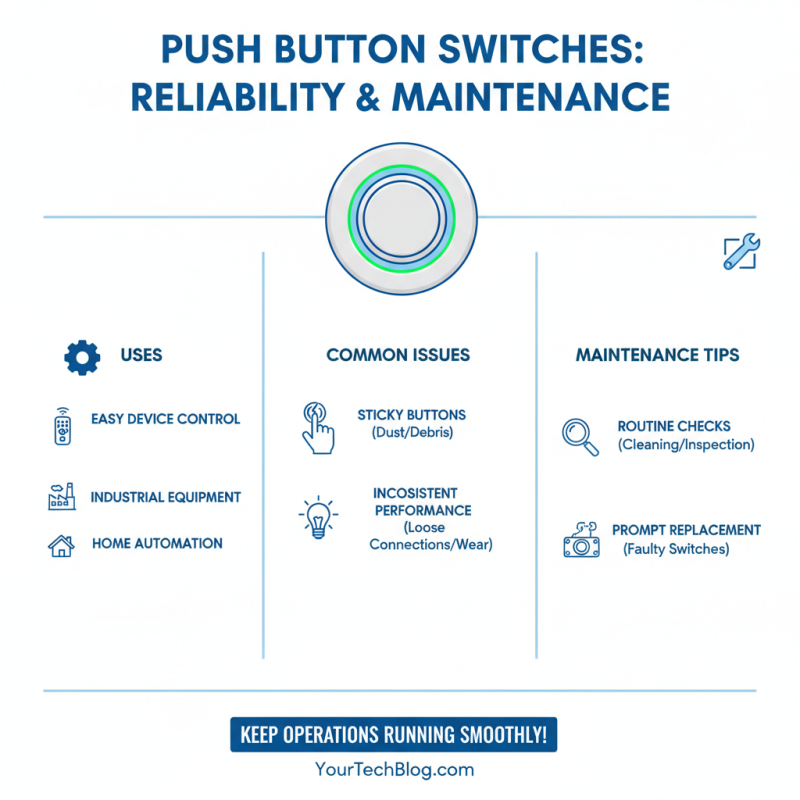
Push button switches can be incredibly useful for controlling devices easily. However, like any other electronic component, they may require maintenance and troubleshooting. When a switch fails, it can disrupt operations. Common issues include sticking buttons and inconsistent performance. Users often overlook the importance of routine checks.
One common problem is accumulation of dirt and debris. This can affect the button's responsiveness. Cleaning the switch regularly is essential. A soft brush or compressed air can help remove dust. Be gentle to avoid damaging the switch.
If a switch stops working, check the wiring first. Loose connections can prevent the device from functioning correctly. Ensure all connections are tight and secure. If the switch is still unresponsive, it may be time to replace it. Remember, it’s better to swap in a new switch than to struggle with a faulty one. Regular maintenance can prevent future headaches.