2026 Best Momentary Push Button for Global Buyers

A Momentary Push Button closes or opens a circuit only while an operator presses it. Release the button, and its spring returns the actuator to rest. Simple action. Yet a poorly matched switch can interrupt a production line, expose contacts to moisture, or feel wrong through work gloves.

The International Federation of Robotics’ World Robotics 2024 report counted 4,281,585 industrial robots operating in factories worldwide in 2023. It also recorded 541,302 new installations that year. These figures do not measure push-button demand. They do illustrate the expanding scale of automated equipment, where dependable operator interfaces matter. For global buyers, that means comparing more than price and appearance.

This guide examines actuator style, contact configuration, electrical ratings, mechanical life, panel dimensions, and environmental protection. IEC 60947-5-1 covers control-circuit devices, while IEC 60529 defines IP enclosure ratings; neither replaces checking a specific product’s test evidence. Look for clear datasheets, traceable certifications, and stated operating conditions. A high IP rating alone does not guarantee suitability for every washdown or outdoor setting. That distinction is easy to miss. Product claims also vary in detail, so buyers should confirm test methods and conditions with suppliers before ordering.
2026 Best Momentary Push Button for Global Buyers

What a Momentary Push Button Is and How It Works

2026 Best Momentary Push Button for Global Buyers

What a Momentary Push Button Is and How It Works

A momentary push button is an input device that works only while someone presses it. Inside, moving contacts complete or interrupt an electrical circuit. When pressure ends, a spring returns the actuator to its original position. The action is brief. A normally open button closes during pressing, while a normally closed button opens.

In control panels, I check the circuit symbol before choosing the hardware. Contact rating, operating voltage, current, and switching frequency affect service life. For global buyers, terminal style, panel thickness, and mounting dimensions deserve equal attention. A sealed actuator may suit dusty workshops or outdoor cabinets. Small details matter. Temperature, moisture, and repeated impact can change performance over time.

During testing, measure contact bounce with suitable equipment or confirm the controller can manage it. Mechanical bounce may create several rapid signals from one press. A control system might need debounce settings. I also verify the button’s travel, return force, and emergency access requirements. Documentation should state electrical ratings, environmental limits, test results, and installation conditions. The catalog drawing is not always the whole story. Real installations are less tidy. A tight fit can damage the housing, while loose wiring can create intermittent operation. Source records from qualified suppliers and review them against the actual application.

Main Types of Momentary Push Buttons and Their Uses

Momentary push buttons close or open a circuit only while the operator presses them. They return when released. This action suits start, reset, test, and jog controls. The normally open type activates equipment after pressing. The normally closed type interrupts a signal during pressing. Selection depends on the control logic, not appearance alone.

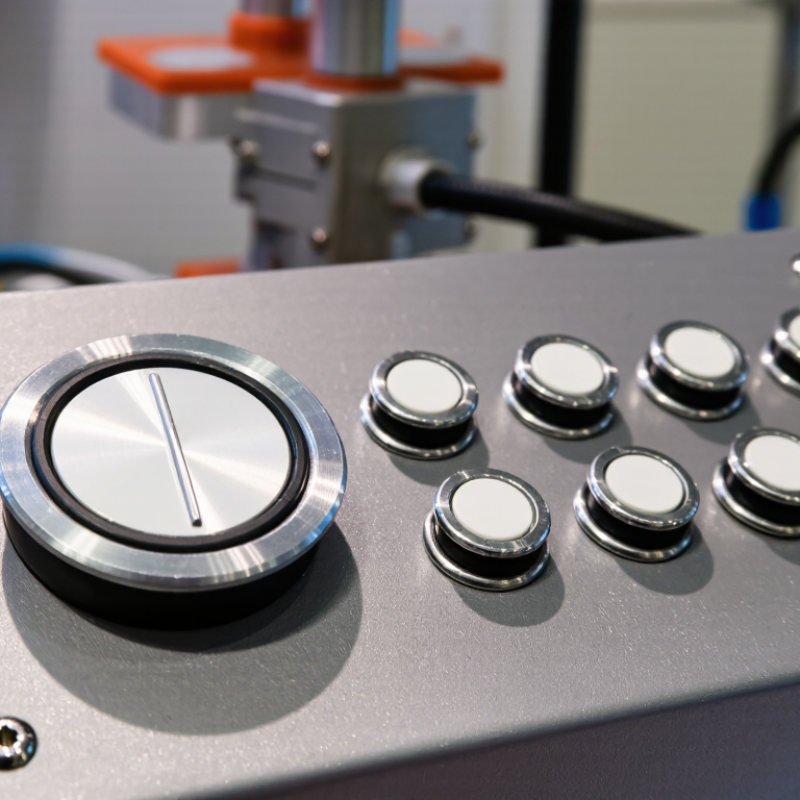
Panel-mount buttons fit metal or plastic control enclosures. They often provide a firm, visible stroke for industrial machines and operator stations. PCB tactile buttons are smaller and mount directly onto circuit boards. They work well in instruments, remote controls, and compact electronic devices. Illuminated buttons add status feedback in dim panels. Waterproof versions support outdoor equipment, cleaning areas, and exposed interfaces. Check the IP rating carefully. A sealed button may still fail if the cable opening remains unprotected.

For global buyers, electrical rating, contact material, actuation force, and mechanical life deserve close review. A button rated for signal circuits may not suit motor loads. Contact bounce can also affect digital inputs, especially in fast controllers. Testing the complete switch, connector, and enclosure is more reliable than checking a datasheet alone. I have seen projects choose a low-cost button, then replace it after users disliked its stiff action. That decision looked efficient at first. It was not. Samples, temperature tests, and repeated pressing reveal practical weaknesses before volume purchasing.

2026 Best Momentary Push Button for Global Buyers

Main types of momentary push buttons and their uses, shown through a typical normally open (NO) and normally closed (NC) switching cycle.

How to read the chart: A normally open contact remains open until the button is pressed, while a normally closed contact remains closed until the button is pressed. These contact behaviors are commonly used for machine start commands, control panels, reset inputs, safety interlocks, and signaling circuits. The 400–600 ms press interval represents a sample operating cycle rather than a universal actuation time.

Key Specifications to Compare Before Buying

Choosing the best momentary push button in 2026 starts with its electrical specifications, not its appearance. Check the rated voltage and current for the exact load, including motor startup surges. A higher rating is not always safer. Oversized contacts may feel unnecessary in low-power control circuits.

Short travel feels quick. Long travel can provide clearer feedback. Compare operating force, reset force, and contact bounce when timing matters. A button requiring too much pressure may fatigue operators during repeated use. I have found that a firm, tactile response often works better than a soft action, but this depends on gloves and installation position. Test it in real conditions.

Small details matter. Confirm the panel cutout diameter, terminal type, actuator height, and mounting depth before ordering. Check whether the housing suits dust, water, oil, or outdoor exposure. Look for an appropriate IP rating, operating temperature range, and expected mechanical life. Very useful.

For global purchasing, review insulation requirements, contact configuration, and available technical documentation. Verify certification needs in the destination market instead of trusting a generic product description. Samples should be tested under the intended voltage, switching frequency, and enclosure conditions. Supplier data can be incomplete. Ask for drawings, test reports, and a clear tolerance range. That extra step may reveal a mismatch before production begins.

2026 Best Momentary Push Button for Global Buyers - Key Specifications to Compare Before Buying

The following comparison summarizes commonly available momentary push-button configurations and the key specifications buyers should verify before purchase. Actual ratings depend on the exact construction, terminal type, load, and applicable certification.

Comparison Dimension 16 mm Metal Panel Button 19 mm Metal Panel Button 22 mm Plastic Panel Button 22 mm Metal Panel Button Heavy-Duty 22 mm Panel Button
Typical application Compact control panels, access devices, instrumentation Industrial controls, test equipment, machinery interfaces General-purpose control panels, appliances, light-duty equipment Industrial machinery, outdoor control boxes, automation panels Frequent-use machinery, operator stations, demanding industrial environments
Panel cutout diameter Approximately 16 mm Approximately 19 mm Approximately 22 mm Approximately 22 mm Approximately 22 mm
Switch action Momentary; returns when released Momentary; returns when released Momentary; returns when released Momentary; returns when released Momentary; returns when released
Common contact configuration Normally open (NO); some versions offer normally closed (NC) NO, NC, or changeover contacts depending on the switch body NO or NC; changeover versions may be available NO, NC, or changeover contacts NO, NC, or changeover contacts with independent terminals
Typical contact rating Low-current DC to approximately 3 A at 250 V AC, depending on contact design Approximately 3–5 A at 250 V AC for suitable contact blocks Approximately 1–3 A at 250 V AC for standard light-duty versions Approximately 3–5 A at 250 V AC for standard power contacts Up to approximately 5–10 A at 250 V AC on selected contact configurations
Recommended signal-load use PLC inputs, relay signals, low-voltage control circuits Control circuits and moderate-duty switching Indicator circuits, control inputs, and low-power loads Control circuits and moderate-duty switching Control and power-interface circuits, subject to the specified load rating
Typical operating voltage range 12–24 V DC indicator options are common; contact voltage varies by model 12–24 V DC indicator options are common; contact voltage varies by model 12–24 V DC indicator options are common; contact voltage varies by model 12–24 V DC and 110–230 V AC indicator options may be available 12–24 V DC and 110–230 V AC indicator options may be available
Electrical life Typically 50,000–100,000 operations, load dependent Typically 50,000–100,000 operations, load dependent Typically 30,000–100,000 operations, load dependent Typically 50,000–100,000 operations, load dependent Typically 100,000–1,000,000 operations for selected industrial contact systems
Mechanical life Often 100,000–1,000,000 operations Often 100,000–1,000,000 operations Often 100,000–500,000 operations Often 100,000–1,000,000 operations Often 500,000–1,000,000 operations
Typical operating force Approximately 1.5–3.5 N Approximately 1.5–4 N Approximately 1–3 N Approximately 2–5 N Approximately 2–6 N
Typical travel Approximately 1.5–3 mm Approximately 1.5–3 mm Approximately 1.5–3 mm Approximately 2–4 mm Approximately 2–4 mm
Ingress protection options IP40 to IP67, depending on sealing and mounting method IP40 to IP67, depending on sealing and mounting method IP40 to IP65; sealed versions should be confirmed separately IP65 to IP67 options are commonly available IP65 to IP68 options may be available with appropriate seals
Typical operating temperature Approximately −20°C to +55°C Approximately −20°C to +55°C Approximately −20°C to +55°C Approximately −25°C to +65°C Approximately −25°C to +70°C
Body material Nickel-plated brass or stainless steel; plastic internal components Nickel-plated brass or stainless steel; plastic internal components Engineering thermoplastic housing Nickel-plated brass or stainless steel; plastic internal components Stainless steel or reinforced metal construction
Terminal styles Solder lugs, wire leads, or compact screw terminals Solder lugs, wire leads, or screw terminals Solder lugs, wire leads, or quick-connect terminals Screw terminals, quick-connect terminals, or wire leads Screw terminals or modular contact blocks
Indicator options LED ring or dot illumination; common supply options include 5, 12, and 24 V DC LED ring or dot illumination; common supply options include 12 and 24 V DC LED illumination in multiple colors; voltage must be matched to the circuit Ring, dot, or full-face LED illumination High-visibility ring or full-face illumination options
Best selection priority Small footprint and compact installation Balanced size, durability, and panel visibility Cost efficiency and lightweight construction Weather resistance and industrial appearance High cycle life, rugged construction, and frequent operation
Key verification before buying Panel thickness, terminal clearance, contact rating, and seal specification Panel thickness, actuator size, contact arrangement, and mounting nut dimensions Flame rating, panel material compatibility, terminal layout, and actual IP rating IP rating, contact material, switching load, and installation torque Certified ratings, load type, actuator protection, terminal capacity, and replacement parts

Important: AC and DC ratings are not interchangeable. Inductive loads, inrush current, capacitive loads, and low-level signals can require derating or a dedicated relay interface. Always confirm the manufacturer’s datasheet, certification requirements, panel thickness, wiring method, and environmental rating for the exact part number.

How to Choose the Best Button for Your Application

2026 Best Momentary Push Button for Global Buyers

How to Choose the Best Button for Your Application

Choosing a momentary push button starts with the circuit, not appearance. Confirm whether the application needs normally open or normally closed contacts. Check the voltage, current, and switching load under real operating conditions. A control panel may need a light touch, while industrial equipment may require firm actuation. Short travel can feel responsive, but it may also cause accidental presses. Small details matter.

The installation environment should guide the specification. For outdoor equipment, look for suitable sealing and corrosion resistance. Dust, water spray, vibration, and temperature changes can shorten service life. Measure the panel cutout before ordering. Then verify terminal style, body depth, button diameter, and mounting method. A compact button may not fit behind a crowded enclosure. It happens more often than expected.

In practical testing, I would operate the button repeatedly with the intended gloves, tools, or protective covers. Test it under load, not only by touch. Confirm the electrical rating with a reasonable safety margin. A high cycle-life figure is useful, but it does not replace application testing. I have seen attractive buttons fail because the actuator was too exposed. Consider tactile feedback, cleaning access, replacement speed, and clear documentation. Global buyers should also request consistent inspection records and confirm applicable regional requirements. The perfect choice on paper may still feel wrong on the machine. Recheck it before large-scale purchasing.

Global Sourcing, Safety Standards, and Supplier Checks

2026 Best Momentary Push Button for Global Buyers

Global buyers should treat a momentary push button as a safety component, not a low-cost accessory. IEC 60947-5-1 defines requirements for control circuit devices, including switching performance and insulation. IEC 60529 covers enclosure protection ratings, such as IP65. These ratings matter in dusty workshops or washdown areas. They do not replace a complete equipment risk assessment.

Supplier screening needs evidence. Request technical datasheets, compliance declarations, test reports, material details, and lot traceability. Check contact ratings under the intended voltage and load. Confirm the operating force, travel, terminal type, panel cutout, and expected electrical life. The ISO Survey 2022 reported more than 1.2 million ISO 9001 certificates worldwide. Certification helps, but it does not guarantee consistent button quality. Audit records and recent production samples reveal more.

Tips: Order samples from the planned production lot. Test them with your real relay or controller. Measure contact resistance before and after repeated operation. Compare the marked rating with the test report. A low price can hide weak terminals or inconsistent sealing. I have seen suppliers provide excellent samples, then deliver different materials. That risk deserves a written approval process. Keep spare samples for future comparison. Relying on one certificate alone is an avoidable mistake.